Hackers Exploit Critical WSO2 API Manager JWT Flaw Using Forged Admin Tokens
Security researchers have detected active exploitation attempts targeting a critical authentication-bypass vulnerability in WSO2 API Manager, with attackers sending forged JSON Web Tokens (JWTs) containing administrator privileges.
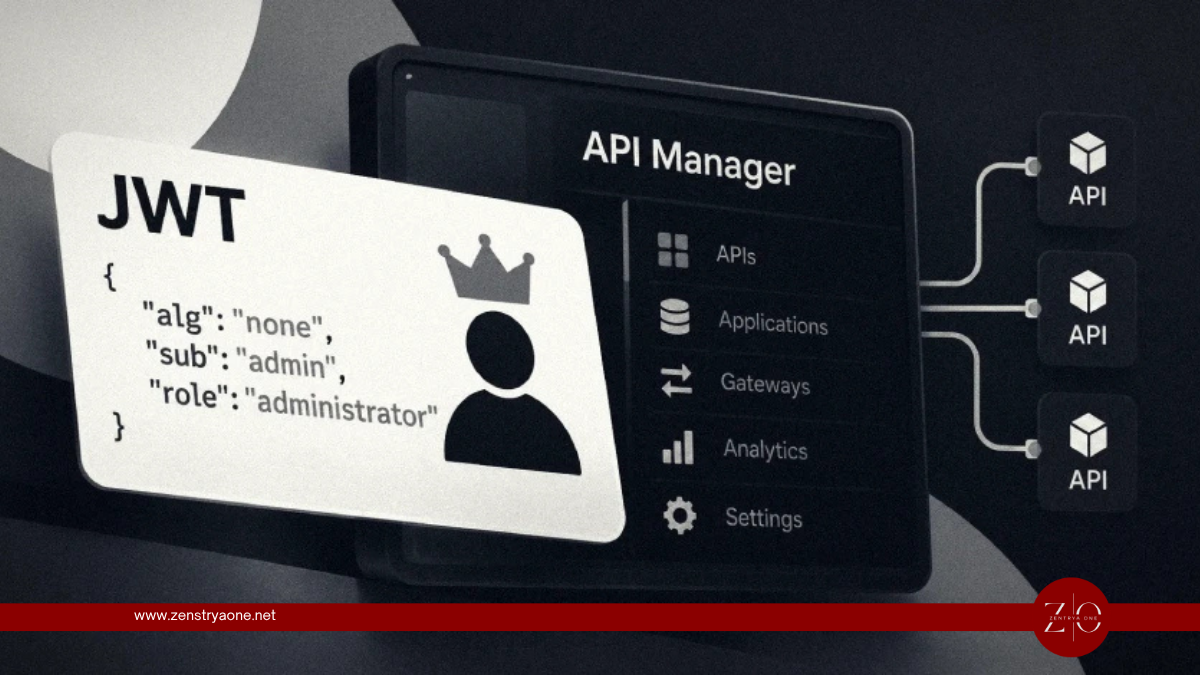
Tracked as CVE-2026-5430, the vulnerability allows an unauthenticated remote attacker to bypass JWT authentication because affected WSO2 products can incorrectly accept tokens signed using unsupported algorithms.
Successful exploitation could result in unauthorized administrative access, account takeover and potentially extensive access to APIs, application secrets and backend services managed through the platform.
WSO2 disclosed and patched the vulnerability earlier in 2026, but researchers at watchTowr detected exploitation attempts against exposed systems on September 13, 2026.
CVE-2026-5430 at a Glance
| Detail | Information |
|---|---|
| CVE | CVE-2026-5430 |
| Severity | Critical |
| CVSS v3.1 | 10.0 multi-tenant / 9.8 single-tenant |
| Vulnerability | Improper verification of cryptographic signature |
| Attack vector | Network |
| Authentication required | No |
| User interaction | No |
| Potential impact | Authentication bypass and account takeover |
| Active exploitation attempts | Yes |
| Original discovery | Hacktron Team |
WSO2 describes the issue as an authentication bypass caused when JWT authentication processes a token signed with an unsupported algorithm.
How the JWT Authentication Bypass Works
JWTs are commonly used by APIs to prove a user's identity and communicate authorization information.
A token typically contains a header identifying the signing algorithm, a payload containing claims about the user, and a cryptographic signature that allows the receiving application to verify that the token came from a trusted authority.
CVE-2026-5430 breaks this security assumption.
Affected WSO2 components can accept JWTs signed using algorithms they do not properly support, resulting in incorrect cryptographic-signature verification.
An attacker can exploit this behavior to construct a forged token containing privileged claims.
The attack can therefore be summarized as:
Attacker identifies vulnerable WSO2 deployment
↓
Malicious JWT is constructed
↓
Token uses unsupported signing algorithm
↓
Forged privileged claims included
↓
Vulnerable WSO2 component incorrectly accepts token
↓
Authentication bypass occurs
↓
Attacker gains unauthorized privileged access
No legitimate administrator credentials are required for the initial exploitation.
Forged Administrator Tokens Seen in the Wild
The vulnerability is no longer purely theoretical.
watchTowr reported that its global honeypot infrastructure captured forged JWTs on September 13 containing administrator-level privileges.
Researchers believe the attacker was attempting to obtain broad access to WSO2 API Manager environments through the forged authorization claims.
The observed activity is significant because the malicious tokens were already constructed with elevated privileges, suggesting attackers understand the vulnerability and are attempting to weaponize it against exposed deployments.
At this stage, the available reporting confirms active exploitation attempts. It does not establish how many real organizations, if any, have been successfully compromised through the flaw.
Why Compromising an API Manager Is Particularly Dangerous
WSO2 API Manager occupies a highly sensitive position inside enterprise architecture.
An API gateway can sit between external clients and internal applications, handling authentication and routing requests toward backend systems.
If attackers obtain administrative control over this infrastructure, the impact can extend far beyond compromising a single web application.
watchTowr researchers warned that successful exploitation could potentially expose:
- API backend endpoints
- Backend credentials
- Consumer keys
- Application secrets
- Registered application information
- Sensitive information passing through APIs
- Internal services accessible through the gateway
An attacker who gains sufficient access could potentially use the API-management infrastructure as a pathway toward systems that are not themselves directly exposed to the internet.
Affected WSO2 Products
WSO2's security advisory identifies several affected products:
| Product | Affected Versions |
|---|---|
| WSO2 API Manager | 4.1.0 – 4.6.0 |
| WSO2 API Control Plane | 4.5.0, 4.6.0 |
| WSO2 Traffic Manager | 4.5.0, 4.6.0 |
| WSO2 Universal Gateway | 4.5.0, 4.6.0 |
The vulnerability therefore affects more than the core API Manager product and organizations should inventory the complete WSO2 deployment rather than checking only one component.
WSO2 Has Already Released Fixes
WSO2 Support Subscription customers can install the following patched update levels:
| Product | Version | Fixed Update Level |
|---|---|---|
| API Control Plane | 4.6.0 | 22 |
| API Control Plane | 4.5.0 | 58 |
| API Manager | 4.6.0 | 21 |
| API Manager | 4.5.0 | 57 |
| API Manager | 4.4.0 | 72 |
| API Manager | 4.3.0 | 108 |
| API Manager | 4.2.0 | 197 |
| API Manager | 4.1.0 | 257 |
| Traffic Manager | 4.6.0 | 21 |
| Traffic Manager | 4.5.0 | 56 |
| Universal Gateway | 4.6.0 | 21 |
| Universal Gateway | 4.5.0 | 57 |
Community users can obtain the corresponding fixes through WSO2's open-source repositories.
With active exploitation attempts now observed, organizations running affected versions should treat remediation as a priority rather than waiting for a normal maintenance cycle.
What Security Teams Should Investigate
Patching prevents future exploitation of the vulnerable code, but organizations operating an exposed WSO2 environment should also determine whether exploitation has already occurred.
Security teams should review historical authentication and API Manager logs for unusual JWT activity, particularly tokens using unexpected or unsupported signing algorithms.
Defenders should investigate:
- JWTs containing unexpected
algvalues - Unusual administrator authentication
- Newly created or modified privileged accounts
- Unexpected administrative API requests
- Unexplained configuration changes
- Abnormal access to API credentials or application secrets
- Unusual access to backend APIs
- Unexpected API subscriptions or applications
- Suspicious consumer-key activity
- Unusual traffic originating from API-management infrastructure
- Attempts to access internal services through the gateway
Because the vulnerability affects token validation itself, organizations should not assume that the absence of traditional failed-login events means exploitation did not occur.
Credential and Secret Exposure Should Be Considered
Organizations finding evidence of successful exploitation should assess whether sensitive credentials and secrets accessible through WSO2 could have been exposed.
Depending on the deployment, this may include backend credentials, API keys, consumer secrets and other application credentials.
Where compromise is confirmed or strongly suspected, incident-response teams should consider rotating potentially exposed secrets after containing the vulnerable systems.
The investigation should also extend to downstream applications because compromising an API-management platform can potentially provide an attacker with access paths into other enterprise systems.
Why the CVSS Score Differs
WSO2 gives CVE-2026-5430 a maximum CVSS v3.1 score of 10.0 under its primary assessment.
The corresponding vector is:
CVSS:3.1/AV:N/AC:L/PR:N/UI:N/S:C/C:H/I:H/A:H
This reflects a remotely exploitable vulnerability requiring low attack complexity, no privileges and no user interaction, with the possibility of affecting resources beyond the original security authority.
For single-tenant deployments, WSO2 adjusts the rating to 9.8 because the security scope does not cross the same boundary.
Immediate Actions for WSO2 Administrators
Organizations using affected WSO2 products should prioritize several actions:
- Apply the official WSO2 security updates immediately.
- Confirm all API Manager-related components have been patched.
- Restrict unnecessary internet access to administrative interfaces.
- Review JWT authentication telemetry for unsupported algorithms.
- Investigate unexpected privileged API activity.
- Audit administrative users and recent configuration changes.
- Review access to backend endpoints and application credentials.
- Rotate sensitive credentials if compromise is suspected.
- Examine downstream systems for evidence of lateral movement.
- Maintain enhanced monitoring after remediation.
Security teams should also identify forgotten development, staging and disaster-recovery instances. An outdated WSO2 deployment outside the main production environment can still provide an attacker with valuable credentials or connectivity into internal infrastructure.
Security Takeaway
CVE-2026-5430 demonstrates why authentication vulnerabilities in API-management infrastructure can have consequences far beyond a conventional application flaw.
The weakness allows attackers to attack the trust mechanism itself: instead of stealing a legitimate administrator token, they can attempt to create a forged JWT containing privileged claims and have a vulnerable system accept it.
The location of the vulnerability makes the risk even more significant. API gateways frequently sit at the boundary between external clients and sensitive internal services, handling authentication, credentials and application traffic.
With forged administrator tokens now observed in active exploitation attempts, organizations running vulnerable WSO2 products should patch immediately and investigate for historical compromise rather than treating the update as routine maintenance.
SEO Meta Description:
Hackers are actively targeting CVE-2026-5430, a critical WSO2 API Manager JWT authentication bypass that allows forged admin tokens and potential account takeover.
Related reporting

Nintendo Switch Vulnerability Lets Nearby Attackers Run Unauthorized Code via QR Code Feature
Nintendo has patched a high-severity vulnerability in the original Nintendo Switch that could allow a nearby attacker to execute unauthorized code or access information stored on the console.

China-Linked Hackers Chain Chrome and Windows Zero-Days to Deploy GRIMWEDGE Backdoor
China-linked threat actors have been observed chaining multiple vulnerabilities in Google Chrome and Microsoft Windows as part of sophisticated cyber-espionage campaigns targeting non-governmental organizations and other high-value organizations.
Telegram Desktop Flaw Lets Hidden JavaScript Steal Messages From HTML Chat Exports
Security researchers have disclosed a high-severity vulnerability in Telegram Desktop that could allow malicious JavaScript hidden inside a seemingly normal chat message to execute when a conversation is exported as HTML and opened in a web browser.