N-able N-central CVSS 10 RCE Exploited in the Wild — Patch Immediately
A maximum-severity vulnerability in **N-able N-central**, a remote monitoring and management (RMM) platform widely used by managed service providers (MSPs) and IT teams, is now being exploited in the wild.
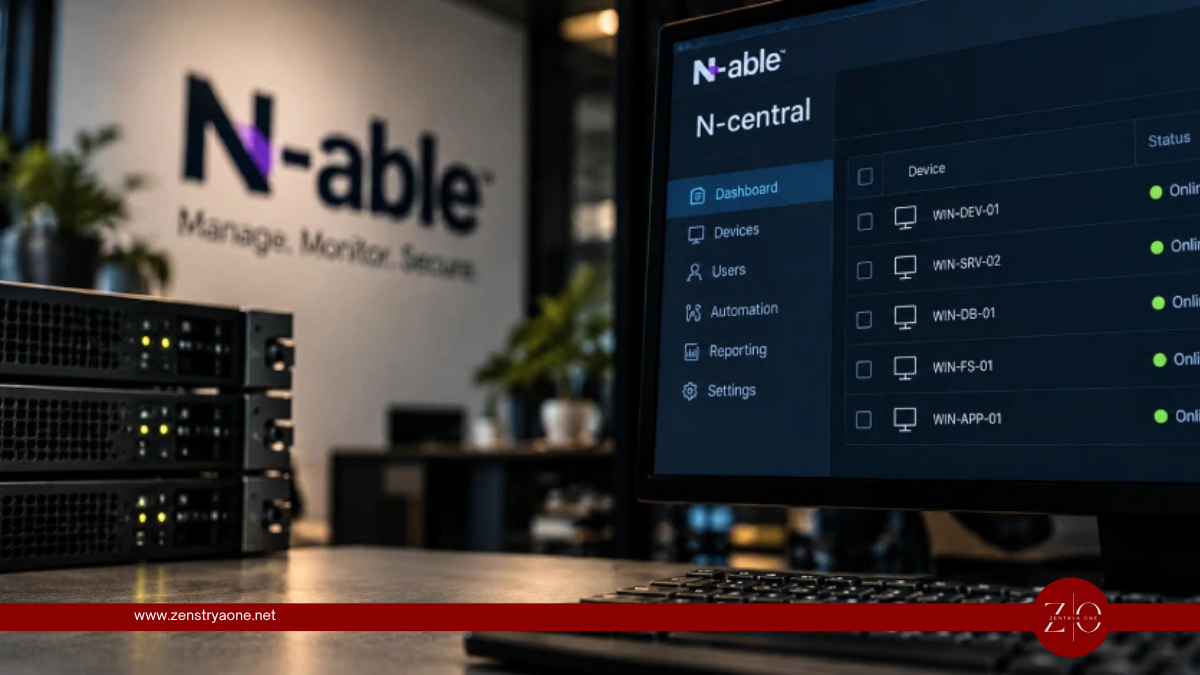
Tracked as CVE-2026-86218, the vulnerability carries a CVSS score of 10.0 and is classified as a static code injection flaw. Successful exploitation can allow an unauthenticated, remote attacker to execute arbitrary code on an N-central server.
N-able released N-central 2026.3 Hotfix 4 (2026.3.1.14) on September 5 to address the vulnerability. The vendor has subsequently warned customers that CVE-2026-86218 has been observed being exploited in the wild.
The development is particularly serious because N-central servers sit at the center of managed IT environments. A successful compromise can potentially provide an attacker with a powerful position from which to interact with downstream systems and endpoints managed through the platform.
Key Takeaways
- CVE-2026-86218 affects N-able N-central.
- The vulnerability has a CVSS 10.0 severity rating.
- It enables pre-authentication remote code execution.
- No valid credentials are required to exploit the flaw.
- N-able says the vulnerability has been exploited in the wild.
- The fix is included in N-central 2026.3 Hotfix 4 / build 2026.3.1.14.
- N-central hosted/NCOD environments have already been patched by N-able.
- On-premises deployments must be upgraded immediately.
- Systems running Hotfix 3 remain vulnerable to CVE-2026-86218.
- CISA has added the vulnerability to its Known Exploited Vulnerabilities (KEV) catalog.
- Administrators should audit N-central accounts for unexpected or unauthorized users.
- Organizations should investigate their N-central and downstream endpoint environments for signs of compromise.
What Is CVE-2026-86218?
CVE-2026-86218 is a static code injection vulnerability affecting N-able N-central.
N-able assigned the flaw a CVSS 4.0 score of 10.0, placing it in the highest possible severity category.
The vulnerability is particularly dangerous because exploitation can occur before authentication.
In practical terms, an attacker does not first need to obtain an N-central username and password. A remotely accessible vulnerable server can potentially be targeted directly, allowing malicious code to execute on the N-central appliance.
This makes the vulnerability significantly more dangerous than flaws that require an authenticated administrator or legitimate user session.
Attack Path
The high-level attack chain can be represented as:
Internet-Exposed N-central Server
↓
Unauthenticated Request
↓
CVE-2026-86218 Exploitation
↓
Remote Code Execution
↓
N-central Server Compromise
↓
Access to RMM Capabilities
↓
Potential Access to Managed Endpoints
N-central is specifically designed to provide centralized administration of customer environments.
Consequently, compromising the management platform can give an attacker an opportunity to move beyond the initially compromised server and target systems managed through it.
This makes an N-central compromise potentially much more significant than a compromise of an isolated workstation or server.
Why N-central Is a High-Value Target
N-central is used by MSPs and IT teams to remotely monitor and administer large numbers of systems.
A single N-central installation can therefore represent a gateway into multiple organizations and numerous endpoints.
This makes RMM platforms attractive targets for threat actors.
Earlier N-central attacks in 2026 demonstrated the consequences of this centralized trust model. Attackers who compromised N-central servers used the platform's Take Control functionality to reach downstream endpoints and subsequently established persistence using Cloudflare tunnels.
While it has not been conclusively established that CVE-2026-86218 was responsible for those earlier intrusions, the latest vulnerability introduces another serious route into the same high-value management infrastructure.
Exploitation Has Been Confirmed—but Important Details Remain Unclear
N-able's latest incident communication states that CVE-2026-86218 has been observed being exploited in the wild and that the company is actively investigating the activity.
However, there is an important distinction between the newly disclosed vulnerability and an earlier N-central compromise investigated by Huntress.
Huntress began investigating a compromised, fully patched N-central production environment on September 4. Researchers were unable to definitively determine which vulnerability was used because historical logs on the appliance had already rotated.
Huntress said it could not confirm whether the newly disclosed CVE-2026-86218 was responsible for that specific compromise, nor could it rule out other vulnerabilities.
Therefore, organizations should avoid assuming that every recently observed N-central intrusion was caused by CVE-2026-86218.
The broader security message remains the same: N-central environments should be treated as high-priority investigation targets.
Hotfix 4 Addresses the Vulnerability
N-able released N-central 2026.3 Hotfix 4, bringing the platform to build:
2026.3.1.14
The update addresses CVE-2026-86218.
Importantly, Hotfix 4 supersedes the previous emergency updates. Administrators who installed Hotfix 3 (2026.3.1.13) are still required to install Hotfix 4 because the newly disclosed vulnerability is separate from the vulnerabilities addressed by Hotfix 3.
Affected/Remediated Builds
| N-central Version | Status |
|---|---|
| Builds before 2026.3.1.14 | Vulnerable |
| 2026.3.1.13 / Hotfix 3 | Still vulnerable to CVE-2026-86218 |
| 2026.3.1.14 / Hotfix 4 | Fixed |
| Hosted NCOD | Patched by N-able |
N-able's release information indicates that agents installed on managed endpoints do not need to be upgraded solely to address this CVE. The priority is updating the N-central server itself.
CISA Adds CVE-2026-86218 to the KEV Catalog
The U.S. Cybersecurity and Infrastructure Security Agency (CISA) has added CVE-2026-86218 to its Known Exploited Vulnerabilities (KEV) catalog.
The addition is significant because the KEV catalog is intended to help organizations prioritize vulnerabilities that are known to have been exploited in real-world attacks.
Federal Civilian Executive Branch agencies have been directed to remediate the vulnerability by September 11, 2026.
For organizations outside the U.S. federal government, the KEV listing should still be treated as a strong prioritization signal.
N-central Has Faced Multiple Security Incidents in 2026
CVE-2026-86218 is not an isolated N-central security event.
The platform has faced several vulnerabilities and active exploitation campaigns during the past several weeks.
CVE-2026-18556
An authentication bypass vulnerability that could allow attackers to obtain administrative access to vulnerable N-central servers.
CVE-2026-18577
A subsequent flaw involving an incomplete fix for the earlier authentication bypass. Attackers exploited the vulnerability to obtain administrative access and move into managed environments.
CISA added the vulnerability to its KEV catalog following reports of active exploitation.
CVE-2026-86206 and CVE-2026-86207
These vulnerabilities were addressed through Hotfix 3 in September.
Huntress reported that the flaws could potentially be chained to bypass access controls and create unauthorized administrator accounts on N-central servers.
CVE-2026-86218
The newest vulnerability is distinct from those earlier issues and allows pre-authentication remote code execution.
The repeated emergency updates demonstrate why N-central administrators need to track vendor advisories continuously rather than assuming that installing one recent hotfix permanently resolves the current threat.
Previous Attacks Demonstrate the Downstream Risk
The risk associated with N-central extends beyond the management server itself.
During the August attacks, N-able reported that attackers used compromised N-central servers to access managed endpoints through Take Control.
Attackers also registered Cloudflare Tunnel services on compromised endpoints, allowing them to maintain outbound connections and persistence even after the route through the N-central server was disrupted.
Huntress observed related activity and identified cases where attackers reached systems belonging to multiple organizations managed through a single N-central environment.
This illustrates why compromise of an RMM platform can become a supply-chain-style security event affecting multiple downstream customers.
Security Recommendations
1. Patch Immediately
Organizations running on-premises N-central should upgrade to:
N-central 2026.3.1.14 / 2026.3 Hotfix 4
Do not assume that installing Hotfix 3 is sufficient.
2. Restrict Internet Exposure
Where possible, restrict access to the N-central administrative interface using:
- VPN access
- IP allowlisting
- Network segmentation
- Firewall restrictions
- Zero Trust access controls
Huntress specifically recommends restricting inbound access to the N-central console and, where appropriate, taking exposed systems offline until they can be patched and secured.
3. Audit Administrator Accounts
Review all N-central users and look for:
- Unexpected accounts
- Recently created administrator accounts
- Unknown email addresses
- Unrecognized usernames
- Accounts with unexpected privilege changes
Pay particular attention to accounts created shortly before or after suspicious activity.
4. Review Take Control Activity
Examine N-central logs for unusual remote-control sessions.
Investigate sessions involving:
- Unknown administrators
- Unusual source IP addresses
- Unexpected endpoints
- Activity outside normal support hours
- Unusual administrative behavior
5. Investigate Managed Endpoints
A compromised N-central server should be treated as a potential entry point into downstream systems.
Review managed endpoints for:
- New services
- Unexpected remote-access software
- Cloudflared installations
- Unknown processes
- Suspicious scheduled tasks
- Unexpected outbound connections
- New administrator accounts
6. Rotate Potentially Exposed Credentials
If there is evidence that an N-central environment was compromised, consider rotating credentials associated with:
- N-central administrators
- Service accounts
- RMM integrations
- API credentials
- Endpoint management accounts
- Cloud services
- Privileged accounts accessible through the RMM platform
7. Preserve Evidence
Do not immediately destroy or rebuild a potentially compromised N-central environment before collecting available evidence.
Security teams should preserve:
- N-central logs
- Authentication records
- Network logs
- Firewall logs
- Endpoint telemetry
- EDR alerts
- Administrator activity
- Take Control records
This is especially important because limited historical logging has already complicated investigations into recent N-central compromises.
SOC Detection Priorities
Security operations teams should prioritize correlation across the N-central server and its managed endpoints.
Potential detection scenarios include:
Suspicious Account Creation
N-central administrator account created
+
Unusual source IP
+
Immediate privileged activity
→ High-priority investigation
Suspicious Remote Access
Unexpected N-central Take Control session
+
Unknown administrator
+
Endpoint process/service changes
→ Potential compromise
RMM-to-Endpoint Attack
N-central compromise
+
Multiple downstream endpoints accessed
+
New remote-access service installed
→ Potential lateral movement/persistence
Why MSPs Should Treat This as a Priority Incident
For a traditional server vulnerability, the impact may be limited to a single compromised host.
For an RMM platform, the potential blast radius is much larger.
An attacker who compromises an MSP's N-central environment may potentially gain access to systems belonging to multiple customers.
That creates a cascading risk:
N-central Server → MSP Environment → Customer Environment → Managed Endpoints
Organizations using N-central should therefore treat the platform as a Tier-0 or highly privileged management system, applying security controls comparable to those used for identity infrastructure and other critical administrative platforms.
Bottom Line
CVE-2026-86218 is a critical, actively exploited vulnerability that should be patched immediately.
With a CVSS score of 10.0, pre-authentication exploitation and remote code execution capabilities, the flaw presents a serious risk to organizations operating vulnerable N-central servers.
The risk is amplified by N-central's role as a centralized RMM platform capable of managing large numbers of downstream systems.
Organizations should not stop at applying the hotfix. Where compromise is suspected, security teams should audit administrator accounts, investigate Take Control activity, examine managed endpoints, review network telemetry and rotate potentially exposed credentials.
For MSPs in particular, the incident should serve as a reminder that compromise of a centralized management platform can quickly become a multi-customer security event.
Vulnerability Details
| Field | Details |
|---|---|
| Product | N-able N-central |
| CVE | CVE-2026-86218 |
| Vulnerability Type | Static Code Injection |
| Impact | Pre-authentication Remote Code Execution |
| CVSS | 10.0 Critical |
| Authentication Required | No |
| Known Exploitation | Yes |
| CISA KEV | Yes |
| Affected Builds | Before 2026.3.1.14 |
| Fixed Build | 2026.3.1.14 |
| Fix | N-central 2026.3 Hotfix 4 |
| Hosted NCOD | Patched server-side |
| Primary Risk | N-central server compromise and downstream environment access |
Related reporting

Hackers Exploit Critical WSO2 API Manager JWT Flaw Using Forged Admin Tokens
Security researchers have detected active exploitation attempts targeting a critical authentication-bypass vulnerability in WSO2 API Manager, with attackers sending forged JSON Web Tokens (JWTs) containing administrator privileges.

Nintendo Switch Vulnerability Lets Nearby Attackers Run Unauthorized Code via QR Code Feature
Nintendo has patched a high-severity vulnerability in the original Nintendo Switch that could allow a nearby attacker to execute unauthorized code or access information stored on the console.

China-Linked Hackers Chain Chrome and Windows Zero-Days to Deploy GRIMWEDGE Backdoor
China-linked threat actors have been observed chaining multiple vulnerabilities in Google Chrome and Microsoft Windows as part of sophisticated cyber-espionage campaigns targeting non-governmental organizations and other high-value organizations.