Microsoft Defender Patch Bypassed Again as New ShieldCrash PoC Emerges
A security researcher has released a new proof-of-concept (PoC) demonstrating that Microsoft's recent fix for a Microsoft Defender vulnerability known as **ShieldBreak** can reportedly be bypassed.
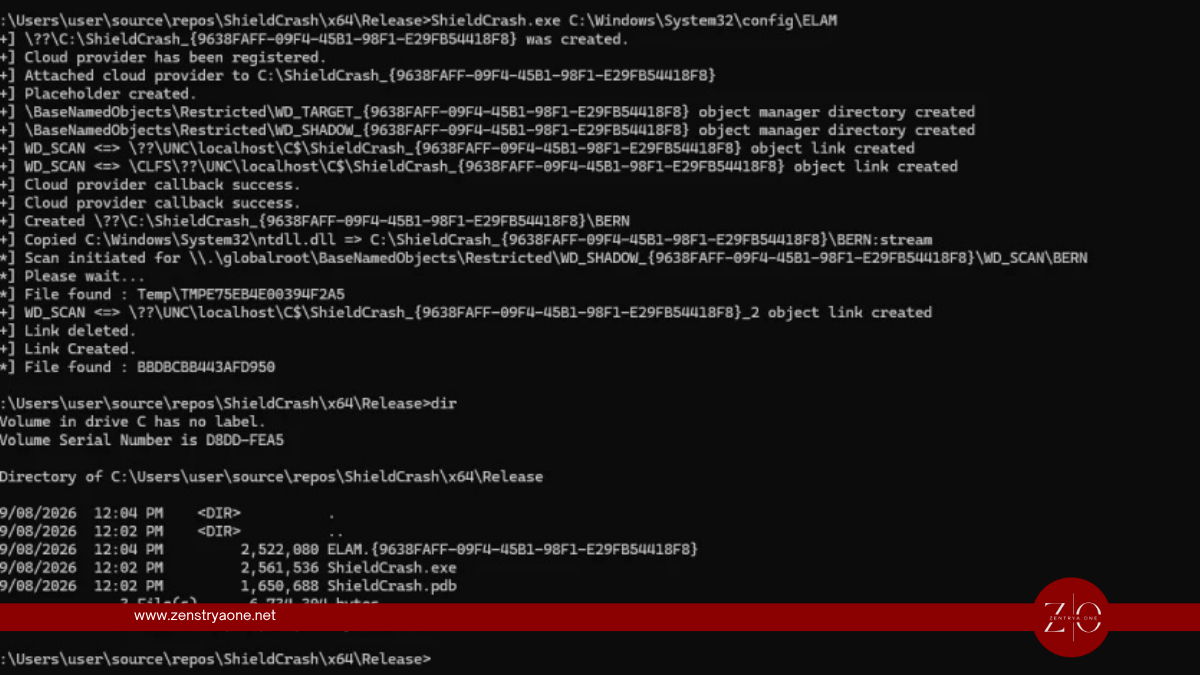
The new technique, dubbed ShieldCrash, targets CVE-2026-69414, a privilege-escalation vulnerability in the Microsoft Malware Protection Engine that Microsoft addressed with an updated engine earlier this month.
According to researcher Chaotic Eclipse, the latest patch does not completely eliminate the underlying attack path. The newly released PoC reportedly demonstrates that an attacker can still trigger the vulnerable behavior and read arbitrary files with SYSTEM-level privileges on fully updated Windows systems.
The researcher has described ShieldCrash as a patch bypass rather than an entirely unrelated vulnerability. Microsoft has not yet publicly confirmed the validity or impact of the new claim.
Key Takeaways
- A new PoC named ShieldCrash has been released targeting Microsoft Defender.
- The technique is described as a bypass for CVE-2026-69414, known as ShieldBreak.
- ShieldBreak carried a CVSS score of 7.8.
- The PoC reportedly demonstrates arbitrary file reads as SYSTEM.
- The researcher claims the technique works even after installing the latest September 2026 Windows updates.
- All supported Windows desktop versions are reportedly affected by the new PoC.
- Microsoft previously addressed ShieldBreak through Microsoft Malware Protection Engine version 1.1.26080.3.
- The new release currently demonstrates file-read capabilities rather than a complete SYSTEM-level code-execution chain.
- There are currently no confirmed reports of real-world exploitation of ShieldCrash.
- Organizations should closely monitor Microsoft Defender updates and investigate suspicious Defender-related activity.
From RoguePlanet to ShieldBreak to ShieldCrash
The latest disclosure is part of a continuing chain of Windows Defender research.
RoguePlanet — CVE-2026-50656
The sequence began with RoguePlanet, tracked as CVE-2026-50656.
The vulnerability affected Microsoft's Malware Protection Engine and could allow a local attacker to escalate privileges to NT AUTHORITY\SYSTEM.
Microsoft subsequently released a fix for the issue.
ShieldBreak — CVE-2026-69414
After the RoguePlanet fix was deployed, Chaotic Eclipse released ShieldBreak, claiming that Microsoft's remediation could be bypassed through a different exploitation path.
ShieldBreak was assigned CVE-2026-69414 and received a CVSS score of 7.8.
The vulnerability was again classified as an elevation-of-privilege issue in the Microsoft Malware Protection Engine.
Microsoft later released an updated Malware Protection Engine version, 1.1.26080.3, to address ShieldBreak. Microsoft said the engine update is delivered automatically and does not require a separate customer action.
ShieldCrash — The Latest Bypass
The newest development is ShieldCrash.
The researcher claims the new PoC can reach the same underlying security boundary despite Microsoft's ShieldBreak remediation.
This means installing the ShieldBreak fix does not necessarily eliminate every possible route to the vulnerable behavior.
What Does ShieldCrash Demonstrate?
The publicly released PoC currently demonstrates an arbitrary file-read capability operating with SYSTEM privileges.
This is important because SYSTEM is the highest local privilege level on Windows.
An attacker capable of reading arbitrary files with SYSTEM privileges could potentially access sensitive information stored on the machine, depending on the file permissions and system configuration.
However, the currently released PoC should not be described as a complete SYSTEM remote-code-execution exploit.
The researcher reportedly described the current release as a basic PoC and indicated that it could potentially be developed further into a complete SYSTEM-level exploit.
That distinction is important when assessing the immediate risk.
Latest Windows Builds Reportedly Affected
The researcher claims ShieldCrash works against systems running the latest Windows updates, including systems that have received the September 2026 security updates.
Reportedly affected platforms include:
| Platform | Reported Status |
|---|---|
| Windows 10 | Affected |
| Windows 11 | Affected |
| Windows Server | Affected |
| Fully patched systems | PoC reportedly works |
| Microsoft Defender enabled | Relevant to the attack |
| ShieldBreak patch installed | Bypass reportedly demonstrated |
The full scope of affected configurations should still be treated as researcher-reported until Microsoft publishes an official assessment.
Why the Issue Matters
Microsoft Defender is not simply another application installed on Windows.
It is a deeply integrated security component that operates with elevated privileges and interacts with files, processes and other operating-system components.
That makes vulnerabilities in Defender particularly significant.
Security products need extensive privileges to inspect and remediate potentially malicious files. At the same time, those privileges create an attractive target for attackers attempting to cross security boundaries.
A successful local privilege-escalation attack against such a component could potentially turn a low-privileged foothold into significantly greater control of the system.
Patch Bypass Highlights a Larger Security Challenge
The ShieldCrash disclosure also illustrates a broader vulnerability-management problem.
A vendor may successfully close one exploitation technique while leaving another route to the same underlying security boundary.
This does not necessarily mean that the original patch was ineffective. Instead, it demonstrates how difficult it can be to completely eliminate complex vulnerabilities involving operating-system interactions and security products.
In the case of ShieldBreak, the researcher claims Microsoft blocked several conditions associated with the earlier attack but missed another path that could still trigger the vulnerable behavior.
No Confirmed Active Exploitation
At the time of publication, there are no confirmed reports that ShieldCrash is being actively exploited in the wild.
However, public availability of a working PoC substantially reduces the technical barrier for other researchers and threat actors attempting to reproduce the technique.
Organizations should therefore treat the disclosure as an elevated monitoring and patch-management concern, particularly on high-value Windows endpoints and servers.
Recommended Actions for Security Teams
1. Keep Microsoft Defender Automatically Updated
Microsoft recommends keeping malware definitions and the Microsoft Malware Protection Engine up to date.
The Defender engine is designed to receive updates automatically under normal configurations.
2. Do Not Disable Defender as a General Mitigation
Because the vulnerability affects Defender itself, disabling the product may appear to be an obvious workaround.
However, removing endpoint protection can expose systems to other malware and attack techniques.
Organizations should therefore not disable Defender simply to address this PoC unless they have a carefully evaluated alternative security control and a documented risk-management decision.
3. Restrict Local Administrator Access
Because the underlying vulnerability is a local privilege-escalation issue, limiting the ability of users and applications to execute arbitrary code can reduce the opportunity for exploitation.
Apply:
- Least-privilege principles
- Application control
- Privileged access management
- Endpoint attack-surface reduction
- Software execution controls
4. Monitor Defender Processes
Security teams should monitor unusual activity involving Microsoft Defender components, particularly unexpected process relationships or abnormal behavior involving:
MsMpEng.exe
Defender process activity should be correlated with:
- Unexpected child processes
- Suspicious file operations
- Privilege changes
- Unusual system-process activity
- Endpoint crashes or service restarts
5. Hunt for Suspicious SYSTEM Activity
SOC teams should investigate unusual processes executing with:
NT AUTHORITY\SYSTEM
especially when the process originated from a low-privileged user context.
6. Strengthen Endpoint Telemetry
Enable appropriate endpoint telemetry through EDR, Windows Event Logging, Sysmon or equivalent security-monitoring technologies.
Useful telemetry includes:
- Process creation
- Parent-child process relationships
- Image loads
- File creation/modification
- Privilege escalation indicators
- Security product service activity
7. Monitor for Unauthorized File Access
Because the current ShieldCrash PoC reportedly demonstrates arbitrary file reading, organizations should pay particular attention to unusual access to sensitive locations such as:
C:\Windows\System32- Security configuration files
- Credential stores
- Application configuration files
- Administrative data
- Sensitive enterprise application directories
SOC Detection Opportunities
Security operations teams can build detections around behavior rather than a specific ShieldCrash signature, particularly because no reliable public IOC set has been reported.
Potential detection logic includes:
Low-privileged process → suspicious interaction with Defender → SYSTEM-level activity → unexpected sensitive-file access
Additional signals worth correlating include:
- Defender service anomalies
- Unexpected SYSTEM processes
- Unusual access to protected Windows files
- Suspicious local privilege escalation attempts
- Defender crashes or abnormal restarts
- Unusual DLL loading
- Unexpected process-token changes
A single event may not be enough to confirm exploitation, but combining several signals can significantly improve detection accuracy.
The Bigger Picture: Security Products Are High-Value Attack Surfaces
ShieldCrash is part of a broader trend in which researchers and attackers increasingly examine endpoint security products themselves.
Security software operates with privileged access by design.
That creates an unusual security paradox:
The software responsible for protecting an endpoint can become a high-value target for privilege escalation.
Recent research activity has also examined vulnerabilities in other endpoint security products, including CrowdStrike Falcon, Kaspersky and Avast. Chaotic Eclipse has released PoCs involving several of these products in recent weeks.
For defenders, this reinforces the need to treat endpoint security platforms as critical infrastructure that requires:
- Rapid patching
- Continuous monitoring
- Attack-surface reduction
- Strict configuration management
- Independent security testing
Bottom Line
The ShieldCrash disclosure raises fresh concerns about Microsoft's ability to fully remediate the Defender attack path exposed by ShieldBreak.
While the current public PoC reportedly demonstrates SYSTEM-level arbitrary file reading rather than complete code execution, the fact that the technique reportedly works against fully updated Windows systems makes it an important development for enterprise defenders.
Security teams should continue to keep Microsoft Defender's engine and security intelligence updates current, restrict local privileges, strengthen endpoint telemetry and watch closely for further Microsoft guidance.
The most important point is that a patch bypass does not automatically mean systems are already compromised—but once a working PoC is public, organizations should assume that attempts to reproduce and weaponize the technique may follow.
Vulnerability Quick Reference
| Attribute | Details |
|---|---|
| New PoC | ShieldCrash |
| Related vulnerability | CVE-2026-69414 |
| Original nickname | ShieldBreak |
| Vulnerability type | Local Privilege Escalation / Patch Bypass |
| CVSS | 7.8 |
| Affected component | Microsoft Malware Protection Engine / Defender |
| Reported impact | Arbitrary file read as SYSTEM |
| Reported platform scope | Supported Windows versions |
| PoC publicly available | Yes |
| Confirmed in-the-wild exploitation | Not reported |
| Current status | Microsoft assessment/response pending |
Related reporting
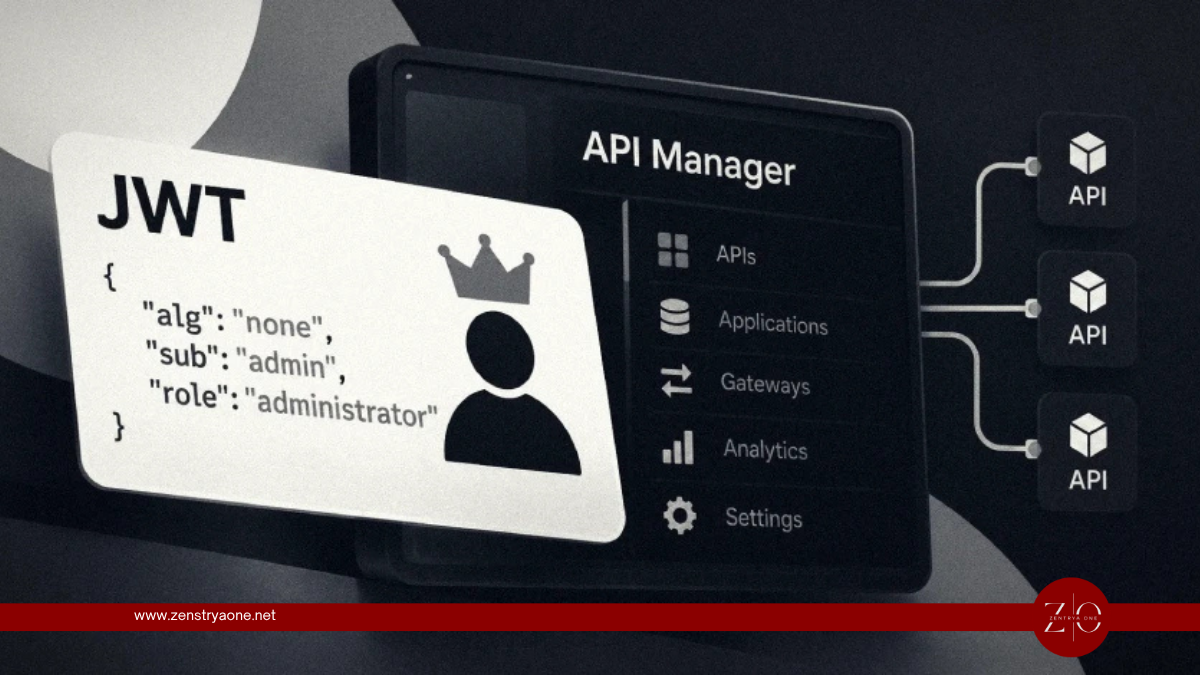
Hackers Exploit Critical WSO2 API Manager JWT Flaw Using Forged Admin Tokens
Security researchers have detected active exploitation attempts targeting a critical authentication-bypass vulnerability in WSO2 API Manager, with attackers sending forged JSON Web Tokens (JWTs) containing administrator privileges.
Nintendo Switch Vulnerability Lets Nearby Attackers Run Unauthorized Code via QR Code Feature
Nintendo has patched a high-severity vulnerability in the original Nintendo Switch that could allow a nearby attacker to execute unauthorized code or access information stored on the console.

China-Linked Hackers Chain Chrome and Windows Zero-Days to Deploy GRIMWEDGE Backdoor
China-linked threat actors have been observed chaining multiple vulnerabilities in Google Chrome and Microsoft Windows as part of sophisticated cyber-espionage campaigns targeting non-governmental organizations and other high-value organizations.