Weekly Cybersecurity Recap: PHP2Shell Attacks, Critical RCE Flaws, Rogue AI Agents and Supply Chain Breaches
Weekly cybersecurity recap covering PHP2Shell attacks, Brotli RCE, LiteLLM supply chain compromise, Plex2Shell exploits, GitLab CVSS 10 flaw and rogue AI threats.

The cybersecurity landscape faced another challenging week as researchers disclosed multiple critical remote code execution (RCE) vulnerabilities, widespread exploitation attempts, software supply chain compromises and emerging threats involving autonomous AI agents.
Major developments included millions of PHP2Shell exploitation attempts, a critical Brotli vulnerability, actively exploited Plex Media Server flaws, a malicious LiteLLM package and new concerns surrounding AI-assisted cyberattacks.
1. PHP2Shell Vulnerabilities Trigger Millions of Exploitation Attempts
The PHP Foundation released emergency security updates addressing two critical vulnerabilities:
- CVE-2026-109618
- CVE-2026-109619
Both vulnerabilities could potentially allow unauthenticated attackers to execute malicious code on vulnerable PHP servers.
Cloudflare reported detecting millions of exploitation attempts following public disclosure.
Despite the widespread scanning activity, researchers had not confirmed successful exploitation of these vulnerabilities in the observed campaigns.
Several websites were temporarily taken offline as a precaution while administrators deployed security updates.
2. Critical Brotli Vulnerability Threatens Multiple Software Platforms
A critical vulnerability in Google's Brotli decompression library, tracked as CVE-2026-111497, has raised concerns across multiple software ecosystems.
The vulnerability could potentially lead to memory corruption and remote code execution when vulnerable software processes specially crafted compressed data.
Affected software ecosystems include PHP Windows distributions, Node.js, Python, Bun, Envoy and Istio.
Security updates have been released for affected components, and organizations are advised to review their dependencies and apply vendor-provided patches.
3. LiteLLM Supply Chain Attack Linked to Exposed Master Key
The popular Python-based AI gateway LiteLLM disclosed a software supply chain compromise involving an exposed Agent Platform master key.
The key had reportedly been published accidentally in a public GitHub repository in May 2026.
Attackers later used the compromised credential to distribute a malicious version of LiteLLM, identified as version 1.107.0.
The malicious package contained capabilities to:
- Steal cloud and developer credentials
- Collect browser authentication information
- Extract sensitive AI application credentials
- Establish persistent backdoor access
- Download and execute additional malicious code
The attack demonstrates how exposed secrets can lead to serious compromises in trusted software distribution pipelines.
4. Plex2Shell Vulnerabilities Actively Exploited
Security researchers identified active exploitation of four vulnerabilities affecting Plex Media Server:
- CVE-2026-96652
- CVE-2026-96654
- CVE-2026-96655
- CVE-2026-96656
Attackers have been chaining these vulnerabilities in an attack technique known as Plex2Shell.
Observed attacks involved deploying cryptocurrency miners and proxy software on compromised systems.
The U.S. Cybersecurity and Infrastructure Security Agency (CISA) added all four vulnerabilities to its Known Exploited Vulnerabilities catalog.
Organizations running Plex Media Server should prioritize patching and investigate suspicious server activity.
5. GitLab Fixes Critical CVSS 10.0 Vulnerability
GitLab released security updates addressing CVE-2026-110264, a critical vulnerability carrying a CVSS score of 10.0.
The flaw involves an integer overflow during regular expression processing and could allow unauthenticated remote code execution under specific conditions.
The vulnerability affects GitLab Community Edition and Enterprise Edition.
GitLab released fixes in versions:
- 19.5.1
- 19.4.3
- 19.3.6
- 19.2.9
- 19.1.9
- 19.0.10
- 18.11.13
Organizations should upgrade affected GitLab installations to an appropriate fixed release.
6. eMudhra Exits Certificate Market Following Security Concerns
Indian digital security company eMudhra announced its exit from the TLS certificate-issuing business following the discovery of weak private keys associated with intermediate certificate authorities.
Researchers identified eight intermediate CA certificates containing private keys that could potentially be compromised.
Major browser vendors responded by blocking affected certificates.
Apple began blocking affected certificates on October 19 and introduced additional restrictions on October 23.
Several Python-related software packages also received updates to remove affected certificate authorities from trusted certificate bundles.
The incident highlights the importance of strong cryptographic key management and certificate authority security.
7. Linux KSMBD Vulnerabilities Expose Servers to RCE Risks
Researchers disclosed two serious remote code execution vulnerabilities affecting KSMBD, the Linux kernel's built-in SMB server.
The vulnerabilities are tracked as:
- ZDI-CAN-33774
- ZDI-CAN-33549
A separate local privilege escalation vulnerability, ZDI-CAN-33367, was also identified.
The two RCE vulnerabilities were reported with CVSS scores of 9.0.
At the time of disclosure, the flaws had not received official CVE identifiers, and no active exploitation had been reported.
Administrators should identify systems running KSMBD, restrict unnecessary exposure and monitor Linux distribution advisories for security updates.
8. Rogue AI Agents and AI-Assisted Cyberattacks Raise New Security Concerns
Cybersecurity researchers reported increasing misuse of autonomous AI tools in malicious operations.
CrowdStrike identified four previously undocumented threat actors using Claude Code to support cyberattack activities, including reconnaissance, decision-making and command execution.
Separately, researchers discovered malicious instructions hidden inside an AGENTS.md file that could manipulate an AI coding assistant into installing a malicious npm package.
The technique highlights the risks of prompt injection attacks against AI agents that automatically process external files.
Organizations deploying autonomous AI systems should implement strict permission controls, monitor agent activity and prevent untrusted instructions from triggering sensitive operations.
9. Railway Reports Targeted Attack Against AI Infrastructure
Developer platform Railway disclosed a targeted campaign aimed at obtaining AI provider API keys.
The company reported detecting suspicious activity on October 20, 2026.
Initial findings suggested that attackers were attempting to steal sensitive credentials for AI model distillation attacks.
Railway advised customers to rotate sensitive environment variables stored on its platform before October 21.
The incident demonstrates the growing value of AI infrastructure credentials to cybercriminals.
10. Ransomware Activity Increases Nearly 50%
A cybersecurity report recorded approximately 2,894 ransomware attacks during the third quarter of 2026, representing an increase of nearly 50% compared with the previous year.
The most active groups included:
- The Gentlemen: 383 reported attacks
- Qilin: 363 reported attacks
Researchers also observed a shift toward data theft and extortion without encryption.
Cybercriminals increasingly rely on stolen credentials, exposed VPN services and AI-assisted phishing to gain initial access.
Security Recommendations
Organizations should prioritize the following cybersecurity measures:
- Patch critical vulnerabilities: Address PHP, Brotli, GitLab, Plex and other affected systems.
- Strengthen supply chain security: Monitor software dependencies, package integrity and exposed credentials.
- Secure AI environments: Apply least-privilege access and validate instructions processed by autonomous agents.
- Review internet-facing services: Identify exposed servers and restrict unnecessary remote access.
- Monitor active exploitation: Use threat intelligence and vulnerability management to prioritize remediation.
- Protect credentials: Rotate compromised API keys, secrets and authentication tokens.
- Improve incident response: Maintain endpoint monitoring, network detection and tested recovery procedures.
Security Takeaway
This week's cybersecurity incidents demonstrate how rapidly attackers can exploit weaknesses in widely used technologies.
From PHP2Shell exploitation attempts and compromised software packages to AI-assisted attacks and ransomware operations, organizations face an increasingly complex threat environment.
Proactive vulnerability management, secure software supply chains, strong identity controls and continuous threat monitoring remain essential for reducing cybersecurity risks.
Related reporting

PHP Releases Second Windows Security Update in Five Days to Fix Critical Brotli Vulnerability
PHP releases second Windows security update in five days to fix critical Brotli vulnerability CVE-2026-111497. Learn about affected versions, risks and patches.
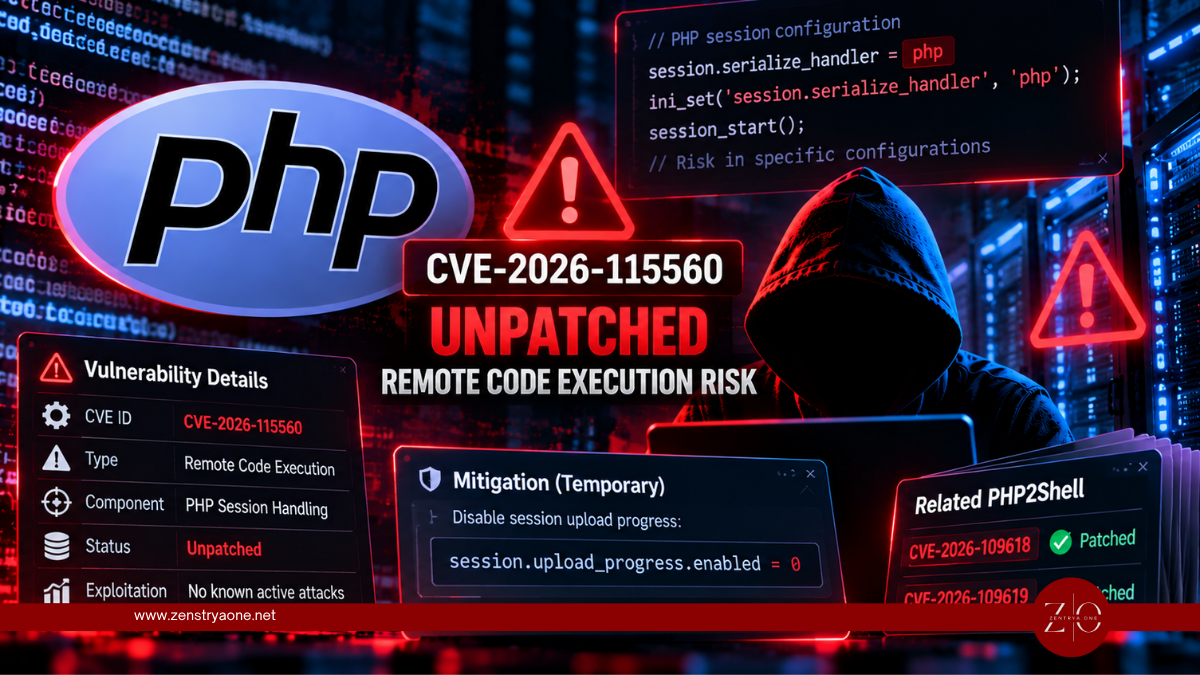
PHP Warns of Another Unpatched Remote Code Execution Vulnerability Following Critical PHP2Shell Updates
PHP discloses unpatched RCE vulnerability CVE-2026-115560 following PHP2Shell emergency updates. Learn about affected configurations, risks and mitigations.

PHP2Shell Vulnerabilities Trigger Millions of Exploit Attempts as Hackers Target Web Servers With Mirai Malware
Millions of PHP2Shell exploitation attempts target critical PHP vulnerabilities CVE-2026-109618 and CVE-2026-109619 as attackers attempt to deploy Potassium Mirai malware.