Google Patches Pixel Modem Zero-Day Exploited in Targeted Attacks
Google patches CVE-2026-58704, a high-severity Pixel cellular modem vulnerability that requires no user interaction and shows signs of limited targeted exploitation.
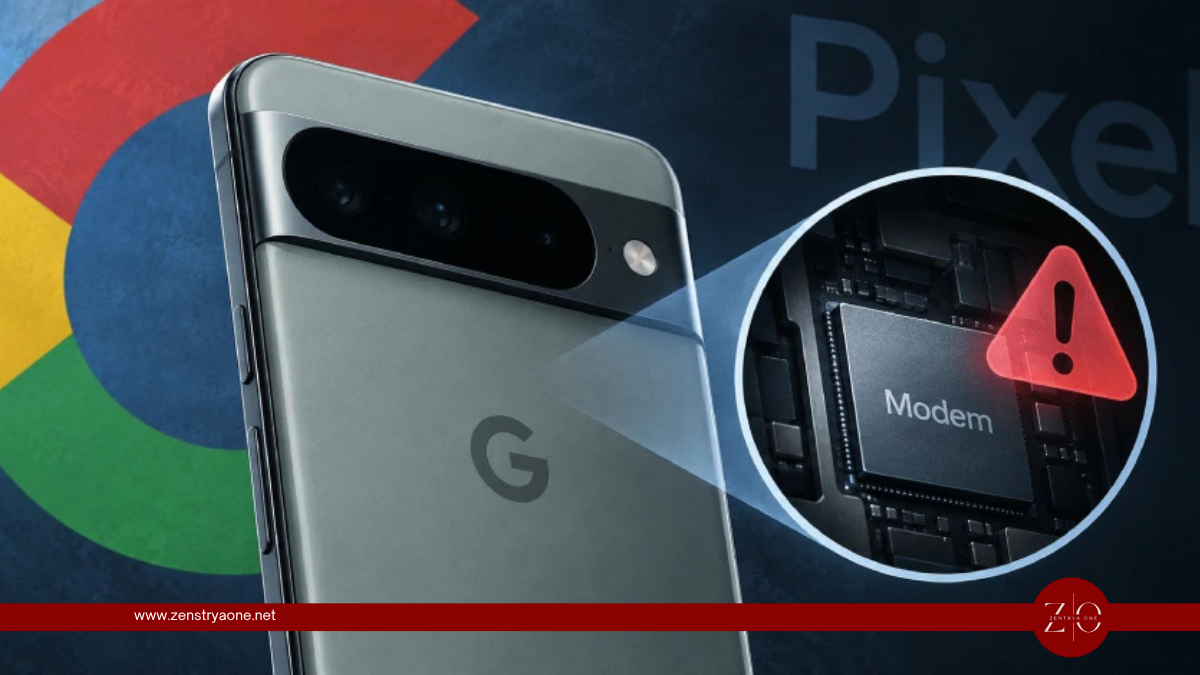
Google has released security updates for a high-severity vulnerability affecting the cellular modem in Pixel devices, warning that the flaw may already be under limited, targeted exploitation.
Tracked as CVE-2026-58704, the vulnerability carries a CVSS score of 8.0 and can allow an attacker to bypass permission checks and escalate privileges through a logic error in the modem.
Of particular concern, exploitation requires no user interaction, meaning a victim does not need to click a malicious link, install an application or open an attachment for an attack to potentially succeed.
Google addressed the vulnerability as part of its September 2026 Pixel security update, with security patch level 2026-09-05 or later resolving the issue.
CVE-2026-58704 at a Glance
| Detail | Information |
|---|---|
| CVE | CVE-2026-58704 |
| Severity | High |
| CVSS | 8.0 |
| Component | Pixel Cellular Modem |
| Vulnerability | Permission bypass / privilege escalation |
| Root Cause | Logic error |
| User Interaction | None |
| Attack Vector | Proximal / adjacent |
| Exploitation | Limited, targeted exploitation indicated |
| Fixed Patch Level | 2026-09-05 or later |
| CISA KEV | Yes |
Google describes the vulnerability as a possible permission bypass caused by a logic error in the cellular modem. Successful exploitation could result in privilege escalation without requiring additional execution privileges or interaction from the device owner.
Why the Modem Vulnerability Matters
Modern smartphones contain multiple security boundaries separating applications, the operating system and lower-level components such as the cellular modem.
The modem processes communications with cellular networks and operates largely outside the normal application environment users interact with.
A vulnerability at this layer can therefore be particularly sensitive.
In CVE-2026-58704, incorrect authorization logic can allow permission checks to be bypassed, potentially giving an attacker greater privileges than intended.
A simplified scenario can be represented as:
Attacker reaches vulnerable modem interface
↓
Crafted interaction triggers logic error
↓
Permission validation is bypassed
↓
CVE-2026-58704 exploited
↓
Privileges escalated
↓
Potential further compromise
However, Google has not publicly disclosed the complete real-world exploit chain used in the targeted activity.
No User Interaction Required
One of the most important characteristics of CVE-2026-58704 is the absence of required user interaction.
Many mobile attacks depend on social engineering:
Malicious message → Victim clicks link → Exploit executes
CVE-2026-58704 does not require that interaction according to the available vulnerability information.
That makes it potentially usable in what is commonly described as a zero-click attack.
The attacker does not need to convince the victim to open a malicious document or approve a suspicious application installation.
This is especially important for high-risk users because traditional phishing awareness alone cannot prevent exploitation of a vulnerability that does not require user action.
But This Is Not a Conventional Internet-Based Remote Attack
The attack characteristics also need to be interpreted carefully.
Available vulnerability information describes the attack vector as proximal or adjacent.
That means CVE-2026-58704 should not automatically be interpreted like an internet-facing web-server vulnerability that can be exploited from anywhere simply by knowing the target's IP address.
The attacker needs an appropriate communication path to the vulnerable modem environment.
Google has not publicly revealed whether observed exploitation involved manipulated cellular infrastructure, a rogue base station, specially crafted network traffic or another modem-facing technique.
Therefore, claims about the exact exploitation method remain speculative until Google or security researchers release additional technical details.
Google Confirms Signs of Targeted Exploitation
Google's September Pixel bulletin states:
“There are indications that CVE-2026-58704 may be under limited, targeted exploitation.”
Google has not disclosed who is exploiting the vulnerability, who has been targeted or how many devices may have been compromised.
The wording suggests the activity is not currently being described as widespread mass exploitation.
Targeted mobile zero-days are often particularly concerning for individuals whose devices contain sensitive communications or information, including executives, researchers, journalists, government personnel and other high-value targets.
However, there is currently insufficient public evidence to conclude which groups were targeted in this specific campaign.
CISA Adds CVE-2026-58704 to KEV
The U.S. Cybersecurity and Infrastructure Security Agency subsequently added CVE-2026-58704 to its Known Exploited Vulnerabilities catalog on September 16, 2026.
CISA described the issue as an improper authorization vulnerability in Google Pixel's cellular modem where a logic error could allow an attacker to bypass permission checks and escalate privileges.
U.S. Federal Civilian Executive Branch agencies were required to remediate the vulnerability by September 19, 2026.
Its inclusion in KEV provides additional confirmation that defenders should treat the vulnerability as an exploitation risk rather than a purely theoretical weakness.
September Pixel Update Fixes 110 Vulnerabilities
CVE-2026-58704 is only one vulnerability addressed in Google's September Pixel security release.
Google patched 110 vulnerabilities in total.
According to the security bulletin and associated reporting, these include vulnerabilities affecting components such as:
- Cellular modem
- Kernel
- Bootloader
- Trusted Execution Environment
- IP Multimedia Subsystem
- Telephony
- Google Security Architecture components
- Video Processing Unit
- Fingerprint trusted applications
The bulletin contains multiple critical vulnerabilities capable of causing remote code execution, elevation of privilege, information disclosure and denial of service.
For example, the bulletin lists critical remote-code-execution vulnerabilities including CVE-2026-55318 in the IP Multimedia Subsystem and CVE-2026-56967 in the modem.
Google has not indicated that those additional vulnerabilities are being exploited in the same campaign as CVE-2026-58704.
Pixel Users Should Check Their Security Patch Level
Google says all supported Pixel devices will receive an update to security patch level:
2026-09-05
or later.
Users should install the update as soon as it becomes available for their device.
Pixel owners can check for updates through:
Settings → Security & privacy → System & updates → Security update
The exact menu wording can vary slightly depending on the Pixel model and Android version.
After updating, users should verify that the Android security update level reflects September 5, 2026 or later.
High-Risk Users Should Prioritize the Update
Because Google has identified signs of targeted exploitation and the vulnerability does not require user interaction, users who may be at elevated risk should prioritize installing the security update.
Organizations managing Pixel devices should also verify patch compliance through their mobile-device-management or endpoint-management platform where available.
Useful enterprise actions include:
- Identify managed Pixel devices.
- Verify security patch levels.
- Prioritize devices belonging to high-risk users.
- Enforce minimum Android security patch requirements.
- Investigate devices that cannot receive current security updates.
- Remove unsupported devices from sensitive environments.
- Monitor for future Google guidance or indicators of compromise.
Unlike phishing-driven attacks, security-awareness training provides limited protection against a vulnerability that can potentially be triggered without interaction.
Patching is therefore the primary mitigation.
Why Mobile Zero-Clicks Are Difficult to Detect
Mobile attacks involving modem or lower-level components can present significant challenges for defenders.
Traditional endpoint monitoring often focuses on:
- Application execution
- File creation
- Browser activity
- Malicious URLs
- Suspicious processes
- User authentication
An attack occurring through a lower-level communications component may leave fewer of the conventional indicators SOC analysts normally use.
This is one reason mobile zero-click vulnerabilities are valuable for targeted surveillance operations.
However, Google has not released public indicators of compromise for the observed CVE-2026-58704 exploitation, so organizations should avoid inventing detection rules based on an exploit chain that has not yet been disclosed.
What Pixel Users Should Do
The immediate recommendation is straightforward:
Install the September 2026 Pixel security update.
Users should also:
- Verify the device is running patch level 2026-09-05 or newer.
- Enable automatic security updates where appropriate.
- Avoid postponing security updates for extended periods.
- Replace Pixel devices that no longer receive security patches.
- Keep applications and Google Play system components updated.
- Monitor Google's security advisories for additional information.
Users who believe they may be specifically targeted by sophisticated attackers should treat unexpected device behavior cautiously, although unusual battery consumption or network activity alone is not evidence that CVE-2026-58704 has been exploited.
Security Takeaway
CVE-2026-58704 highlights an important reality of modern smartphone security: not every attack begins with a malicious application, phishing link or infected attachment.
Vulnerabilities can exist deeper within the device, including components responsible for communicating with cellular networks.
The Pixel modem flaw is particularly noteworthy because it can potentially enable privilege escalation without requiring any action from the victim.
Google has only described the exploitation as limited and targeted, and significant details remain undisclosed—including the threat actor, victims and exact exploitation technique.
That uncertainty makes it important not to overstate what is currently known.
What is clear is that Google has patched the vulnerability, confirmed signs of exploitation, and CISA has added it to the Known Exploited Vulnerabilities catalog.
For supported Pixel users, the most effective response is therefore simple:
Update to security patch level 2026-09-05 or later as soon as possible.
Related reporting

Acronis cPanel Backup Plugin Flaw Exploited in Targeted Attacks to Gain Elevated Linux Privileges
Acronis has issued an urgent security update for a high-severity vulnerability affecting its Backup plugin for cPanel & WHM on Linux, after confirming that attackers have exploited the flaw in limited, targeted attacks.

Hackers Exploit Critical WooCommerce Plugin Flaw to Plant PHP Web Shells
Threat actors are actively exploiting a critical vulnerability in the Wholesale Lead Capture Plugin for WooCommerce, allowing unauthenticated attackers to upload malicious PHP files and potentially take complete control of vulnerable WordPress websites.

Hackers Exploit Critical WSO2 API Manager JWT Flaw Using Forged Admin Tokens
Security researchers have detected active exploitation attempts targeting a critical authentication-bypass vulnerability in WSO2 API Manager, with attackers sending forged JSON Web Tokens (JWTs) containing administrator privileges.