Threat Intelligence Alone Cannot Close the Growing Exploitation Gap
Threat intelligence alone cannot stop rapidly evolving cyberattacks. Learn how security validation, risk-based vulnerability management and faster remediation can help organizations close the growing exploitation gap.
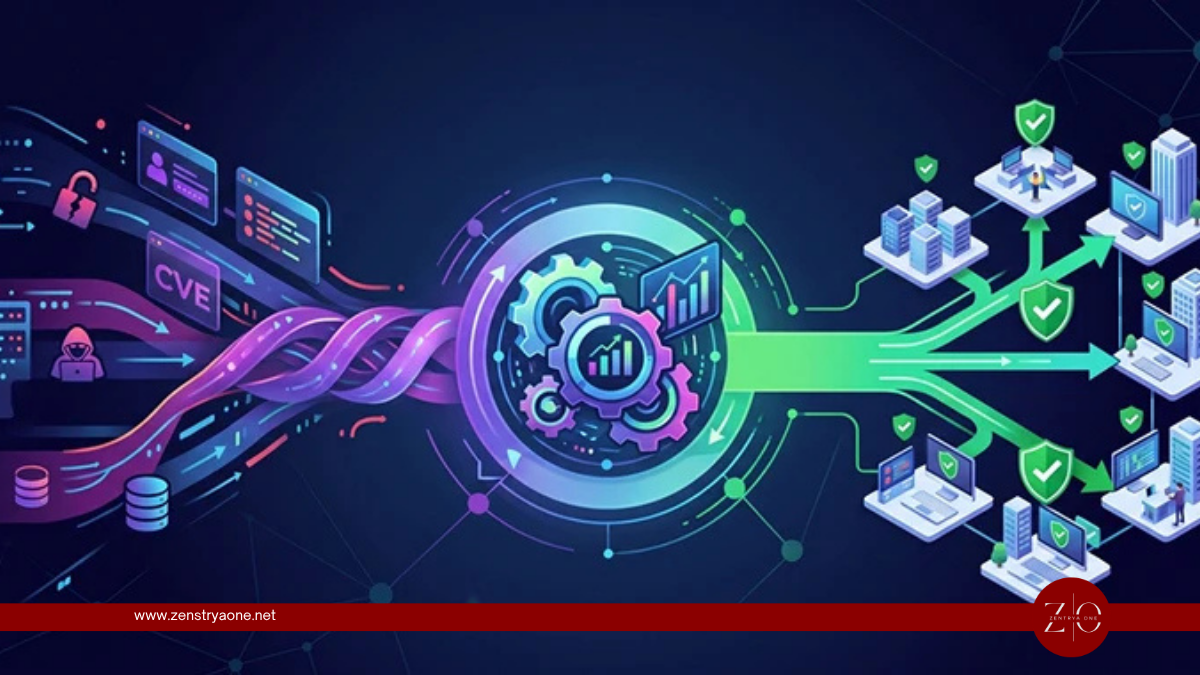
Organizations today have access to more threat intelligence than ever before. Security teams receive vulnerability advisories, leaked-credential alerts, indicators of compromise, dark-web intelligence and threat-actor reports from multiple sources.
But simply knowing that a threat exists does not necessarily prevent an attack.
The growing challenge is what happens between receiving intelligence and taking defensive action.
Attackers are increasingly combining publicly available vulnerability information, stolen credentials, automation and AI-assisted tools to move from identifying an exposure to exploiting it faster than many security teams can investigate and respond.
This creates what can be described as an exploitation gap: the period between discovering that an organization may be exposed and confirming whether attackers can actually exploit that exposure.
The Problem Is No Longer Just Visibility
Threat intelligence traditionally helps organizations answer questions such as:
- Which vulnerabilities are being actively exploited?
- Which threat actors are targeting our industry?
- Have employee credentials appeared in criminal marketplaces?
- Which malware families are currently active?
- What infrastructure is associated with known campaigns?
These signals remain extremely valuable.
The problem is that receiving an alert does not automatically tell a security team whether the threat can successfully compromise their specific environment.
For example, imagine that threat intelligence identifies an employee credential being sold on a criminal marketplace.
The organization now knows:
The credential has been exposed.
But several questions remain:
Is the account still active?
Does the password still work?
Is MFA protecting the account?
Can the credential access an internet-facing service?
What systems could an attacker reach after authentication?
Until those questions are answered, the organization knows that risk exists but does not know whether the exposure represents an immediate attack path.
Security Backlogs Create an Exploitation Window
In many organizations, intelligence enters an operational queue.
A typical workflow might look like:
Threat intelligence received
→ Alert generated
→ SOC triage
→ Security analyst investigation
→ Asset owner identified
→ Exposure validated
→ Remediation ticket created
→ Patch or credential reset
→ Fix verified
Each step takes time.
Meanwhile, attackers are running their own process:
Vulnerability disclosed
→ Targets identified
→ Exploit developed or adapted
→ Internet scanning begins
→ Vulnerable system discovered
→ Exploitation attempted
If the attacker's workflow completes before the defender's workflow, accurate threat intelligence may arrive in time but still fail to prevent compromise.
The Hacker News article argues that this operational queue—rather than a shortage of intelligence—is increasingly where risk accumulates.
AI Is Compressing Exploitation Timelines
Artificial intelligence adds another dimension to the problem.
Attackers can increasingly use AI-assisted tooling to accelerate activities that previously required more manual effort, including:
- Vulnerability research
- Reconnaissance
- Target identification
- Exploit development
- Script generation
- Payload modification
- Infrastructure analysis
- Credential processing
This does not mean every newly disclosed vulnerability will immediately receive a reliable AI-generated exploit.
But automation can reduce the amount of manual work required to analyze vulnerabilities and identify potentially exploitable targets.
Security researchers and vendors have increasingly warned that vulnerability weaponization timelines can shrink dramatically as AI capabilities improve.
The traditional model of having several days—or sometimes weeks—to analyze, prioritize and remediate a vulnerability is therefore becoming less dependable.
From Threat Intelligence to Security Validation
One response is to connect threat intelligence directly with security validation.
Instead of only asking:
"Is this vulnerability being exploited?"
organizations can ask:
"Can this vulnerability actually be exploited against one of our systems?"
Similarly, rather than stopping at:
"An employee credential has leaked."
the organization needs to determine:
"Could that credential currently provide access to our environment?"
This shifts security operations from probability toward evidence.
| Threat Intelligence | Security Validation |
|---|---|
| Credential leaked | Can the credential still authenticate? |
| Vulnerability disclosed | Is an affected system actually exposed? |
| Exploit available | Does the exploit work against our configuration? |
| Threat actor targeting industry | Are relevant attack paths present internally? |
| Security control deployed | Does the control actually stop the attack? |
| Patch installed | Has the exploitable condition disappeared? |
Threat intelligence identifies what organizations should care about.
Validation determines whether that threat represents a practical attack path in the organization's environment.
Threat-Led Penetration Testing
The original analysis highlights Threat-Led Penetration Testing (TLPT) as one way organizations can connect intelligence with practical testing.
Traditional penetration tests are often performed periodically.
A company might conduct a penetration test annually or several times per year.
TLPT takes a more intelligence-driven approach.
Instead of following only a predetermined testing schedule, current threat information helps determine what should be tested.
For example:
Threat intelligence:
Credentials belonging to an employee appear on a criminal marketplace.
Validation:
Determine whether those credentials still provide access to an externally accessible system.
Result:
The organization obtains evidence that the credentials are either exploitable or no longer usable.
The same approach can apply to newly disclosed vulnerabilities.
New CVE
→ Threat intelligence indicates exploitation
→ Identify affected organizational assets
→ Safely validate exposure
→ Prioritize remediation
→ Retest
This can help security teams direct limited remediation resources toward exposures that represent demonstrated risk.
Continuous Validation Is Becoming More Important
Traditional penetration testing provides valuable information but usually represents a snapshot of an environment at a particular moment.
Modern enterprise infrastructure changes constantly.
New:
- Cloud workloads
- APIs
- SaaS applications
- Internet-facing systems
- User accounts
- Containers
- Software dependencies
- Firewall rules
- Remote-access services
can appear between scheduled security assessments.
That makes continuous or more frequent validation increasingly valuable.
A mature process could resemble:
Threat Intelligence
→ Asset Discovery
→ Exposure Identification
→ Automated/Safe Validation
→ Risk Prioritization
→ Remediation
→ Retesting
→ Continuous Monitoring
The goal is not simply to generate another vulnerability list.
It is to continuously determine which exposures can realistically contribute to an attack.
Leaked Credentials Are a Good Example
Credential intelligence demonstrates the problem particularly clearly.
Suppose an organization receives alerts identifying 500 leaked employee credentials.
Treating every credential as equally urgent can overwhelm security teams.
Validation and contextual information can help distinguish between:
Credential A
Account deleted two years ago.
Credential B
Password has already been changed.
Credential C
Active account protected by strong phishing-resistant authentication.
Credential D
Active privileged account with working credentials and external access.
Credential D clearly demands much faster intervention.
The security value therefore comes not only from knowing that credentials leaked but from understanding which exposure can still be weaponized.
Vulnerability Management Faces the Same Problem
The same principle applies to CVEs.
Organizations can have thousands of vulnerabilities across enterprise environments.
CVSS severity alone cannot fully determine remediation priority.
Security teams increasingly need additional context:
- Is exploitation occurring in the wild?
- Is exploit code publicly available?
- Is the vulnerable service internet-facing?
- Does the asset contain sensitive information?
- Can the vulnerability provide remote code execution?
- What privileges could an attacker obtain?
- Are compensating security controls present?
- Can the vulnerability be exploited in the organization's configuration?
A critical vulnerability on an isolated test system may represent less immediate risk than a lower-scored vulnerability being actively exploited against an internet-facing production system.
This is why modern vulnerability management is increasingly moving toward risk-based prioritization and exposure management, rather than relying exclusively on static severity scores.
Automation Can Reduce Defender Response Time
Human oversight remains important, particularly when testing production environments.
But automation can remove delays from repetitive parts of the process.
For example:
Threat feed detects leaked credential
→ Identity automatically correlated
→ Account status checked
→ Exposure validated safely
→ SOC receives prioritized finding
→ Credential revoked
→ Active sessions invalidated
A similar workflow could operate for vulnerabilities:
New critical CVE
→ Asset inventory automatically queried
→ Affected systems identified
→ Internet exposure checked
→ Exploitability assessed
→ High-risk assets prioritized
→ Patch deployed
→ Remediation verified
The objective is not to remove security analysts.
It is to prevent high-confidence intelligence from sitting in a queue while attackers are already acting on the same information.
Detection Is Not the Same as Protection
One of the broader lessons is that security programs should distinguish between visibility and risk reduction.
A dashboard showing:
"Critical vulnerability detected"
provides visibility.
A validated and remediated finding showing:
"The vulnerable system was exploitable, patched and successfully retested"
provides stronger evidence of risk reduction.
The same principle applies across many security functions:
Threat Intelligence → tells you what attackers know
Attack Surface Management → tells you what is exposed
Vulnerability Management → identifies weaknesses
Security Validation → tests whether defenses and exposures behave as expected
Incident Response → handles successful compromise
These capabilities become more effective when they operate as part of one continuous workflow rather than independent security silos.
What Security Teams Should Consider
Organizations looking to reduce the exploitation gap should focus on the speed between signal, validation and remediation.
Useful improvements include:
- Integrating threat intelligence with vulnerability-management workflows.
- Prioritizing vulnerabilities with confirmed active exploitation.
- Automatically correlating CVEs with asset inventories.
- Continuously discovering internet-facing assets.
- Monitoring leaked credentials.
- Rapidly disabling or rotating confirmed exposed credentials.
- Using controlled security validation where appropriate.
- Testing whether security controls actually block relevant attack techniques.
- Automating repetitive triage and enrichment.
- Retesting vulnerabilities after remediation.
- Measuring remediation time for high-risk exposures.
- Maintaining clear ownership for critical assets.
Security teams should also measure how long it takes to move from:
Threat detected → Exposure confirmed → Risk remediated
rather than measuring only how many threat-intelligence alerts were processed.
Security Takeaway
Threat intelligence remains one of the most important sources of early warning available to defenders.
But intelligence by itself does not remove an exposed service, revoke a stolen credential, patch a vulnerable server or stop an attacker.
The security challenge is increasingly about response velocity.
As attackers use automation and AI to accelerate reconnaissance and exploitation, organizations need to shorten the time required to determine whether a threat is relevant to their environment and take defensive action.
The future of effective exposure management therefore depends on connecting:
Threat Intelligence + Asset Context + Security Validation + Remediation + Retesting
The organizations best positioned to reduce cyber risk will not necessarily be those collecting the largest volume of threat intelligence.
They will be those capable of turning high-confidence intelligence into validated and remediated risk before attackers can exploit it.
Related reporting
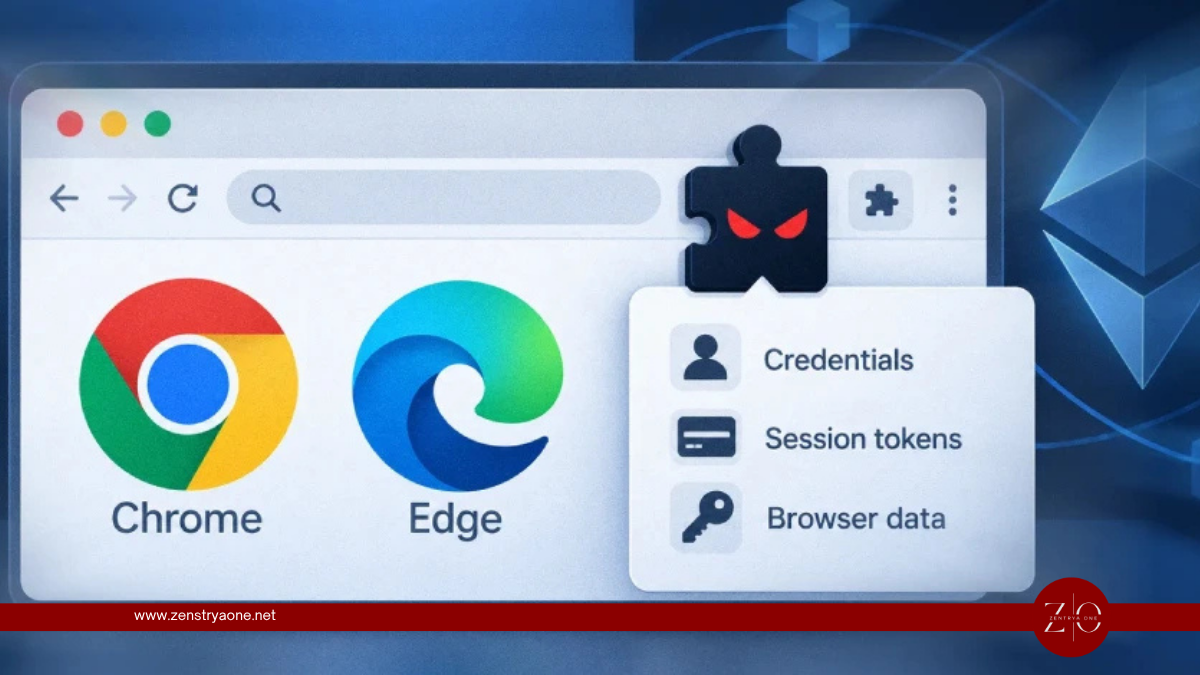
KREMLIN Banking Malware Hijacks Chrome and Edge to Steal Credentials and Session Tokens
Cybersecurity researchers have uncovered a sophisticated banking-malware campaign that hijacks Google Chrome and Microsoft Edge using malicious browser extensions capable of stealing credentials, cookies, session tokens and other sensitive browser data.

UK Government Begins Moving 23 Million Users Away From Passwords With Passkeys
The UK government has begun rolling out passkey authentication to more than 23 million GOV.UK One Login users, marking a major move away from traditional password-based authentication for accessing public services.
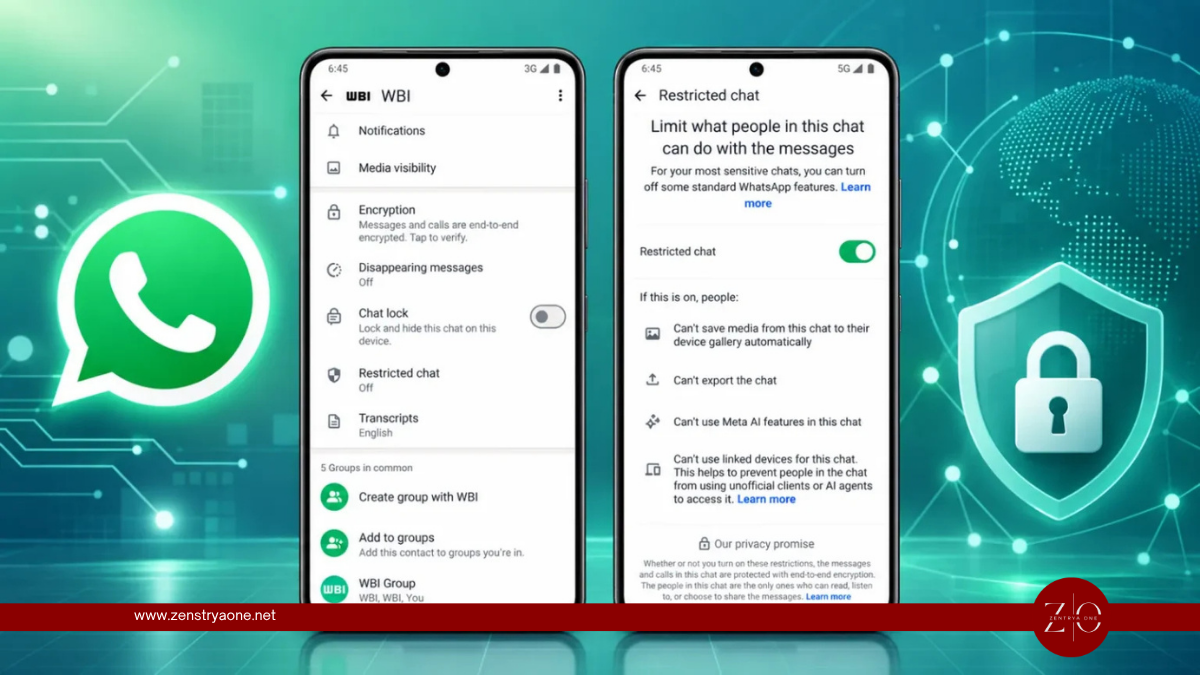
WhatsApp Tests Restricted Chat Feature to Keep Sensitive Conversations on Your Primary Phone
WhatsApp is developing a new privacy feature called Restricted Chat that could give users greater control over where sensitive conversations are accessible.