Hackers Hijack Digital Billboards in Egypt, Malaysia and Brazil to Display Explicit Content
Hackers hijack digital billboards in Egypt, Malaysia and Brazil to display explicit videos, exposing security weaknesses in remote advertising systems.
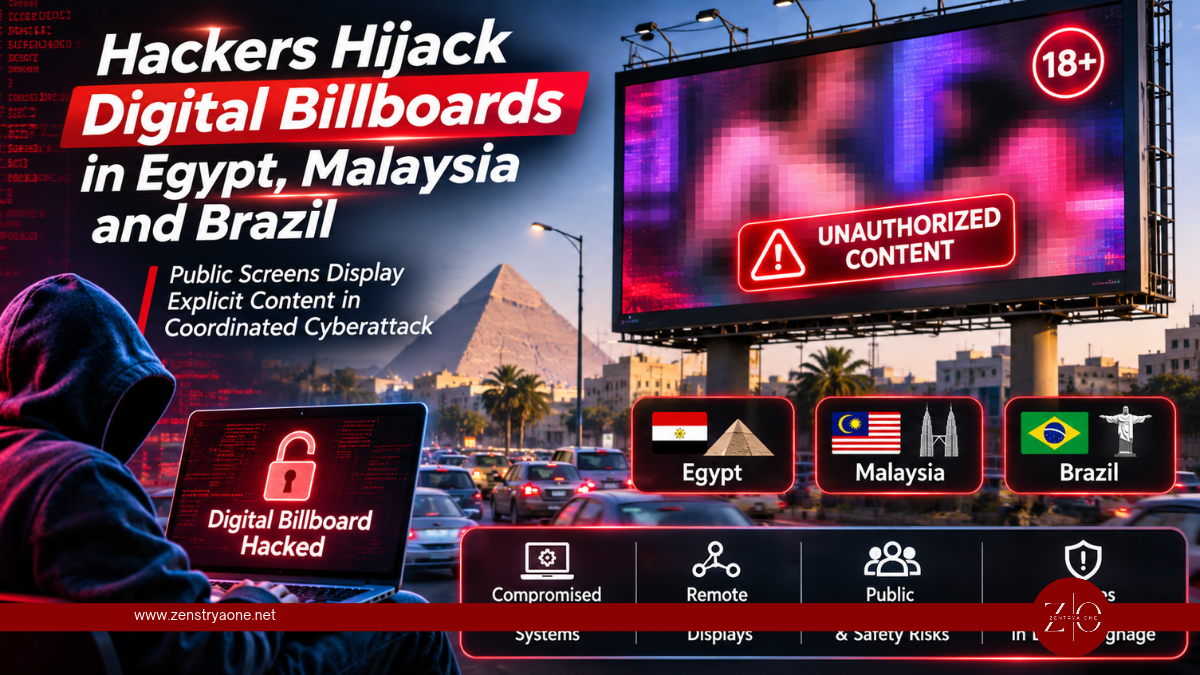
Hackers Hijack Digital Billboards in Egypt, Malaysia and Brazil to Display Explicit Content
November 9, 2026 | Cybersecurity News | Cyberattacks & Digital Infrastructure
A series of cyberattacks targeting digital advertising billboards has disrupted public displays across Egypt, Malaysia and Brazil, with hackers replacing legitimate advertisements with sexually explicit videos.
The incidents, first reported in late October 2026, have raised serious concerns about the security of internet-connected advertising systems and remotely managed digital infrastructure.
A hacking group calling itself Leakers$ has claimed responsibility for the attacks, alleging that weak security protections allowed it to access billboard management systems across multiple countries.
Major Billboard Compromised in Egypt
One of the most widely reported incidents occurred on October 29 along Egypt's busy 26th of July Axis highway near Cairo.
A large digital billboard unexpectedly displayed explicit footage, attracting attention from motorists and prompting videos of the incident to circulate on social media.
Egypt's Interior Ministry confirmed that a cyberattack had affected an international company's website used in connection with billboard operations.
According to authorities, the compromise resulted in unauthorized content appearing on screens in multiple countries.
The Egyptian advertising operator reportedly disabled the affected display while authorities began investigating the incident.
Similar Attacks Reported in Malaysia and Brazil
The disruption extended beyond Egypt.
In Malaysia, the Kluang Municipal Council confirmed that several public LED screens had been compromised. Officials temporarily shut down affected displays and began working with service providers to investigate the breach.
In Brazil, an advertising company operating a digital billboard in Campo Maior confirmed an unauthorized broadcast and reported the incident to police.
The attackers also claimed access to billboard systems in Iraq and China, although these additional claims have not been independently confirmed.
How Did Hackers Take Control?
According to statements attributed to Leakers$, the attackers exploited weaknesses in software responsible for transmitting advertising content to digital screens.
Rather than physically accessing individual billboards, they reportedly targeted internet-accessible content management systems.
The group claimed that automated scanning identified thousands of potentially vulnerable systems within approximately two hours.
The alleged weaknesses included exposed management interfaces and insufficient security protections.
However, the precise technical vulnerability has not been publicly verified, and investigators have not confirmed that every reported incident resulted from the same intrusion.
Why This Attack Matters
Digital advertising networks are increasingly connected to cloud platforms and remote management services.
A compromised management system can potentially allow attackers to manipulate content across multiple screens without accessing the physical equipment.
Such attacks can create several risks, including:
- Unauthorized or inappropriate public broadcasts.
- Reputational damage to advertising operators.
- Financial losses from disrupted advertising services.
- Public safety concerns when roadside displays distract drivers.
- Wider compromise of connected digital infrastructure.
Security Recommendations for Digital Billboard Operators
Organizations managing digital signage should strengthen security through the following measures:
- Restrict internet exposure: Keep billboard management interfaces behind secure access controls.
- Enable multifactor authentication: Protect administrative accounts against unauthorized access.
- Patch vulnerable software: Regularly update digital signage platforms and connected systems.
- Segment networks: Separate advertising infrastructure from critical business systems.
- Monitor content changes: Detect and alert on unauthorized uploads or unusual administrative activity.
- Prepare emergency shutdown procedures: Ensure compromised screens can be quickly disconnected or disabled.
Security Takeaway
The billboard incidents demonstrate how poorly protected internet-connected infrastructure can be exploited to cause widespread public disruption.
Although the attackers claimed their objective was to expose security weaknesses, the incidents highlight the potential consequences of unauthorized access to centrally managed digital systems.
Digital signage operators should treat their advertising infrastructure as security-sensitive technology and implement strong access controls, continuous monitoring and incident response procedures.
Related reporting
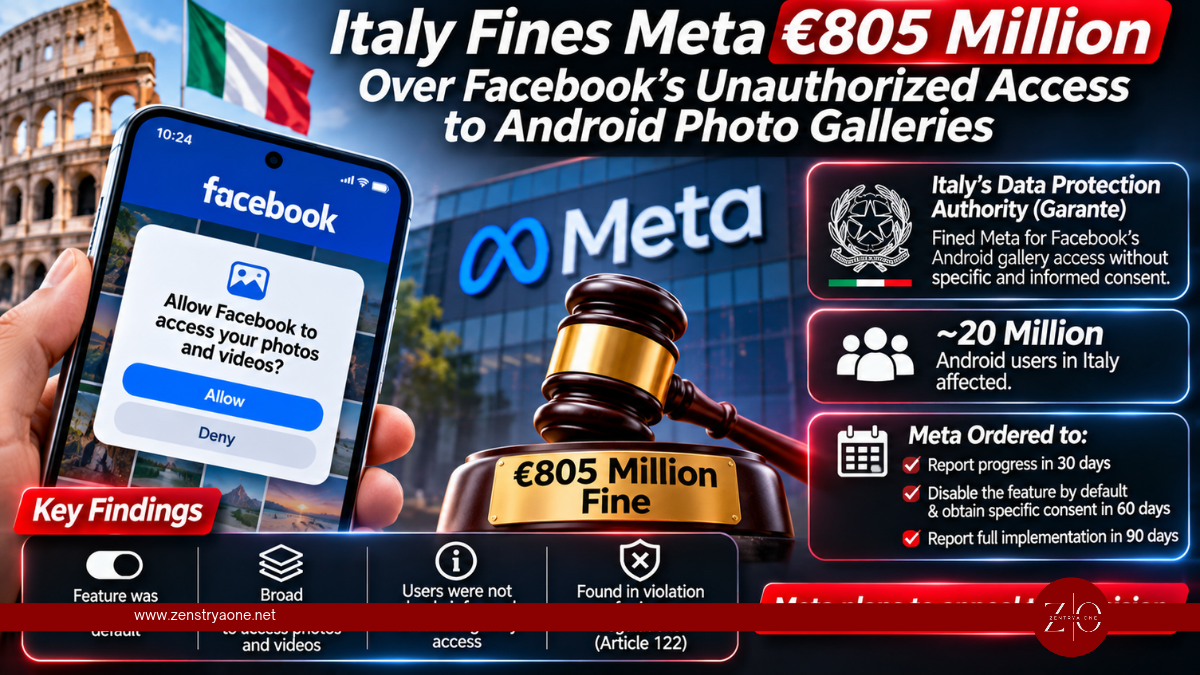
Italy Fines Meta €805 Million Over Facebook's Unauthorized Access to Android Photo Galleries
Italy fines Meta €805 million for Facebook's Android photo gallery access without specific consent, affecting approximately 20 million users.

SilentAir Hackers Compromise Asian Telecom Networks to Intercept SMS Verification Codes
SilentAir hackers compromise Asian telecom networks to intercept SMS 2FA codes and spy on Taiwanese users, exposing mobile signaling security risks.

Sri Lanka Restricts Two EY Audit Partners Following Rs. 13.64 Billion NDB Bank Fraud
Sri Lanka's Central Bank restricts two EY audit partners following the Rs. 13.64 billion NDB fraud, raising concerns about banking controls and audit oversight.