Hackers Steal Over 1 Million Payment Card Records by Exploiting Old Windows Vulnerability
Hackers exploit Windows CVE-2024-49138 to compromise over 700 POS terminals across 20 countries, stealing more than one million payment card records.
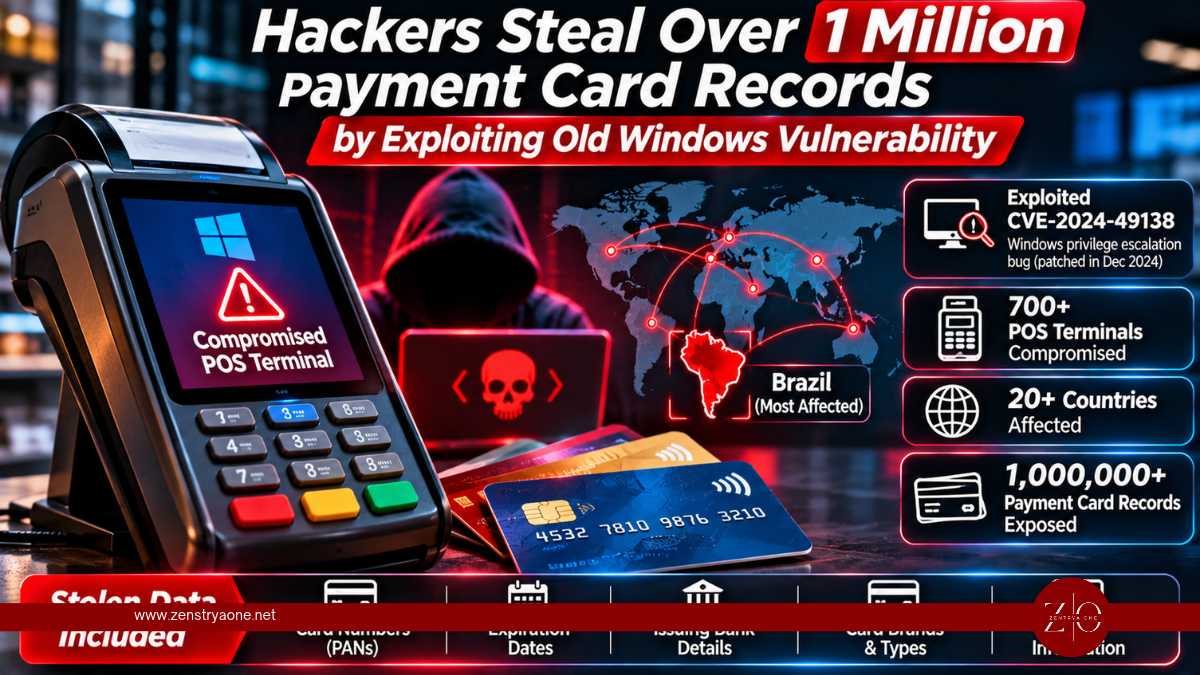
Cybersecurity researchers have uncovered a major cybercrime operation that compromised more than 700 point-of-sale (POS) terminals across over 20 countries, exposing at least one million unique credit and debit card records.
According to an investigation by Cybernews, attackers exploited a previously patched Microsoft Windows vulnerability to gain elevated access to payment terminals and deploy malware designed to steal card information.
Brazil was the most heavily affected country.
How the Cyberattack Was Discovered
The operation was uncovered in August 2026 when Cybernews researchers identified an exposed server belonging to the attacker.
The server contained malware source code, exploitation tools and a payment-card collection interface named VINY JUNIOR TRILHAS.
Researchers also discovered information about compromised terminals, including their operating systems and geographic locations.
Evidence found in the infrastructure suggested that the attacker may have been based in Brazil, although their identity has not been confirmed.
Attackers Exploited a Windows Vulnerability Patched in 2024
The campaign exploited CVE-2024-49138, a Windows Common Log File System (CLFS) privilege escalation vulnerability.
Microsoft released a security patch for this flaw in December 2024.
However, the compromised payment terminals were running outdated Windows software and had not received the necessary security updates.
The attackers reportedly adapted publicly available exploit code for use against POS systems.
Once they obtained initial access, they used the vulnerability to escalate privileges and install a remote access trojan (RAT).
The malware allowed them to maintain access to infected terminals and collect payment information during transactions.
Importantly, CVE-2024-49138 is a local privilege escalation vulnerability. It does not independently provide remote access to a payment terminal.
More Than One Million Payment Cards Exposed
The exposed infrastructure contained records associated with at least one million unique credit and debit cards.
The stolen information reportedly included:
- Primary Account Numbers (PANs).
- Card expiration dates.
- Payment card brands and types.
- Issuing bank information.
- Bank Identification Numbers (BINs).
- Dates associated with stolen records.
Researchers also identified technical information about 782 compromised POS terminals.
Although the campaign affected businesses across more than 20 countries, most infected systems were located in Brazil.
The exposed records create a significant risk of payment fraud and unauthorized transactions.
Why Were POS Systems Vulnerable?
Many retailers rely on Windows-based payment terminals that must remain operational throughout business hours.
Security updates may be delayed because businesses are concerned about compatibility problems or interruptions to payment processing.
However, outdated systems provide attackers with opportunities to exploit vulnerabilities that have already been fixed.
This incident demonstrates how a known security weakness can remain dangerous when organizations fail to maintain effective patch management.
Security Recommendations for Businesses
Organizations operating POS terminals should prioritize the following measures:
- Apply security patches: Install Microsoft updates addressing CVE-2024-49138 and other known vulnerabilities.
- Maintain supported operating systems: Replace outdated Windows installations and unsupported POS software.
- Segment payment networks: Isolate POS terminals from general corporate and guest networks.
- Deploy endpoint protection: Monitor suspicious processes, unauthorized remote access and malware activity.
- Restrict privileged access: Apply least-privilege principles and secure remote administration.
- Protect payment information: Use validated payment encryption solutions and follow applicable PCI DSS requirements.
- Monitor suspicious transactions: Coordinate with payment processors and financial institutions to detect potential fraud.
What Should Cardholders Do?
Customers concerned about payment card exposure should regularly review bank statements and enable transaction notifications.
Any suspicious transaction should be reported immediately to the card issuer.
Where appropriate, affected cardholders should request card replacement or additional fraud protection.
Security Takeaway
The discovery of this campaign highlights the continuing risks associated with outdated payment infrastructure.
A Windows vulnerability patched nearly two years earlier was reportedly used to compromise hundreds of terminals and collect more than one million payment card records.
Businesses must treat POS terminals as security-sensitive endpoints and prioritize patch management, network segmentation, continuous monitoring and payment data protection.
Related reporting
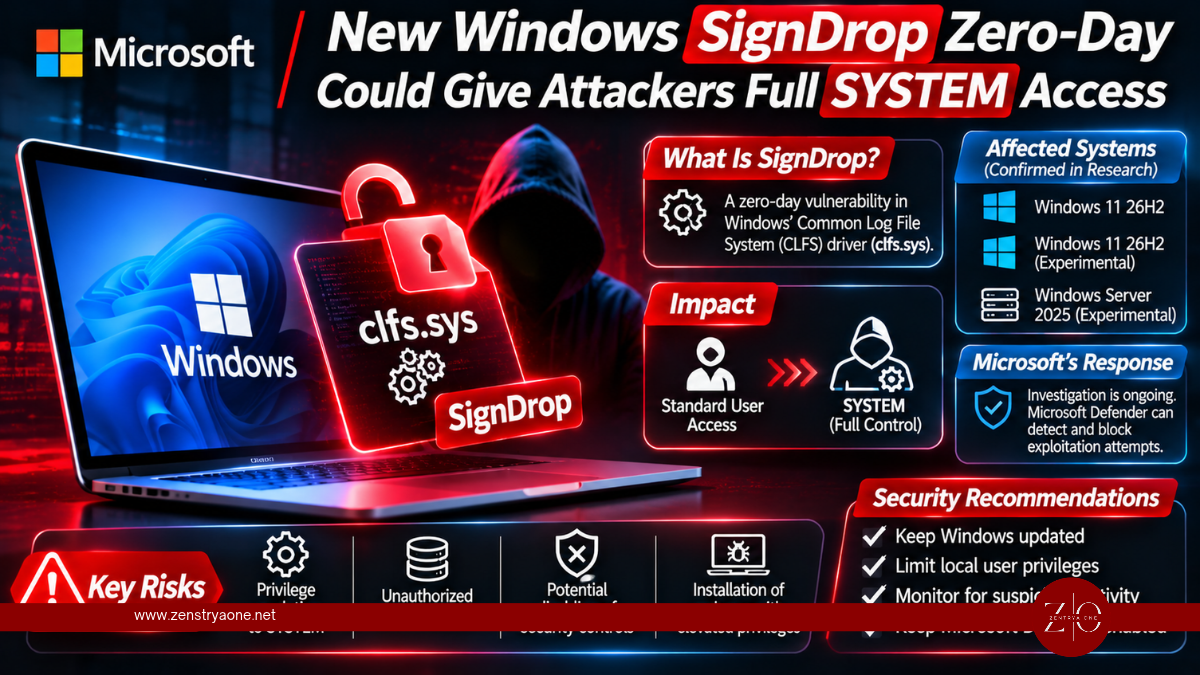
New Windows SignDrop Zero-Day Exploit Could Give Attackers Full SYSTEM Access
New Windows SignDrop zero-day exploit abuses Microsoft CLFS security protections to gain SYSTEM privileges. Learn about affected systems and mitigation.

Apple Fixes Critical iMessage Privacy Flaws That Could Expose Private Group Chats
Apple patches two iMessage vulnerabilities that could expose private group chats, alongside Bluetooth, AirPlay and Brotli security flaws.
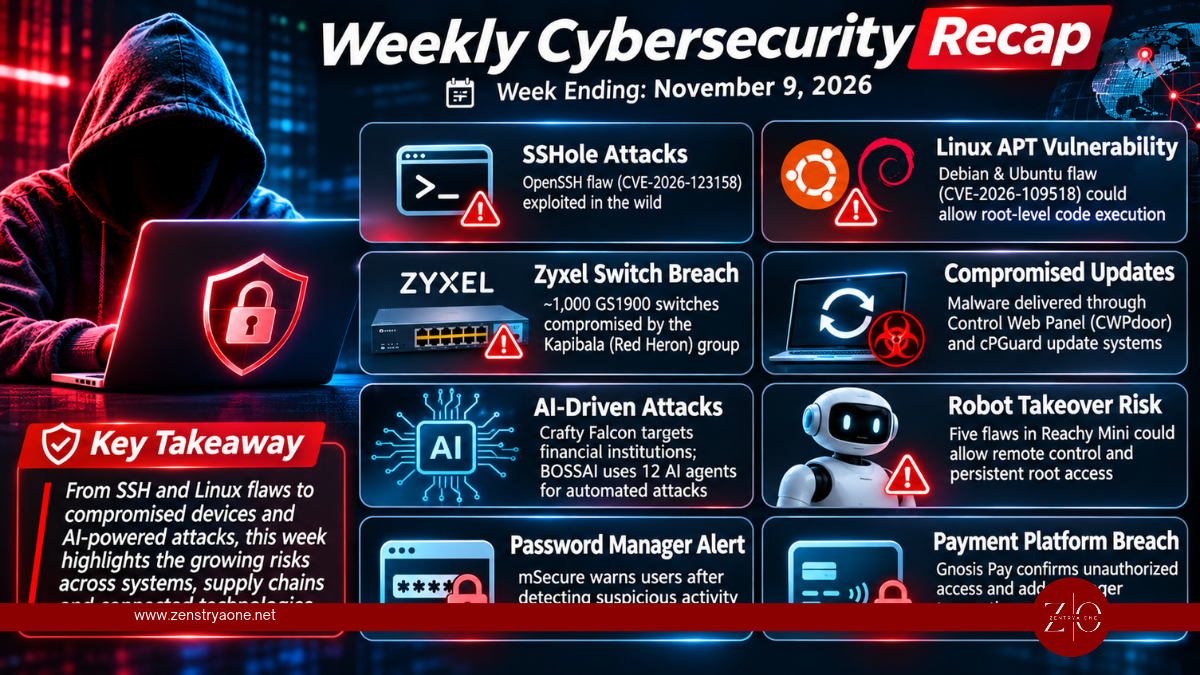
Weekly Cybersecurity Recap: SSHole Attacks, Linux Root Exploits, AI-Powered Threats and Network Breaches
Weekly cybersecurity recap covering SSHole exploitation, Debian and Ubuntu APT vulnerabilities, Zyxel switch attacks, AI-driven threats and malware campaigns.