U.S. Agencies Warn Hackers Are Targeting Refrigeration Systems, Raising Fire and Food Safety Risks
U.S. agencies warn of cyberattacks targeting refrigeration controllers worldwide, risking fires, food spoilage and disruption to critical infrastructure.
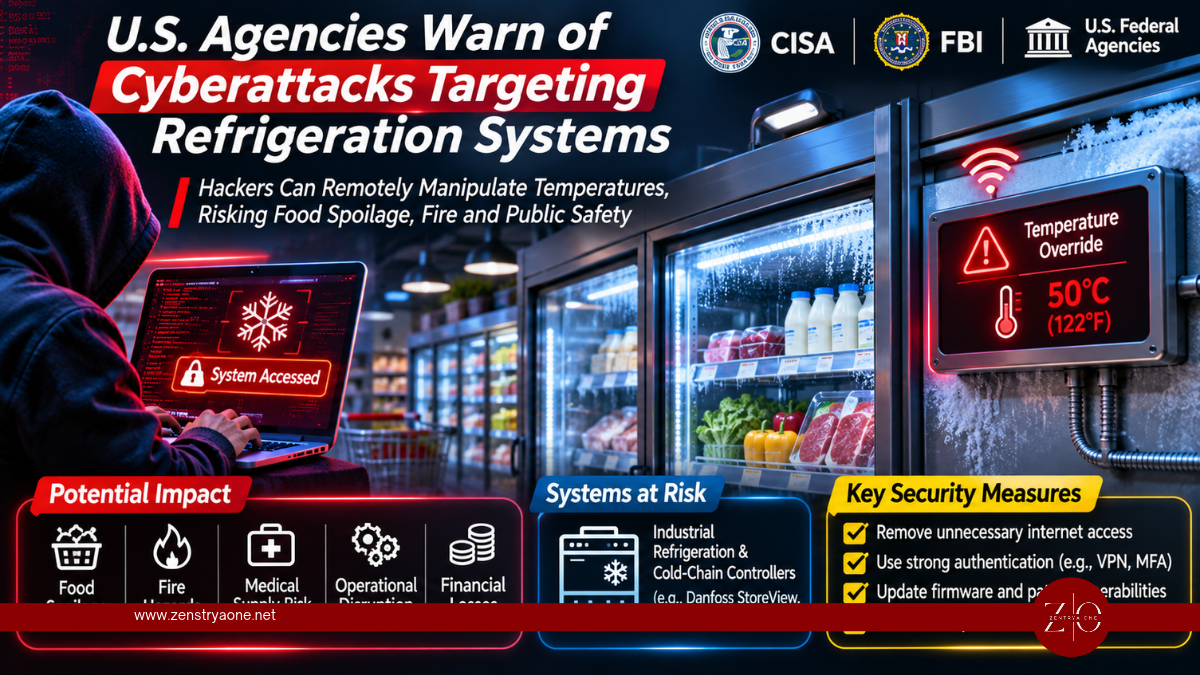
U.S. federal agencies have issued an urgent cybersecurity warning after identifying ongoing cyberattacks targeting industrial refrigeration and cold-chain monitoring systems worldwide.
The warning highlights how attackers can remotely manipulate temperature controls, potentially causing food spoilage, equipment damage, operational disruption and even fire hazards.
The joint advisory, issued on November 5, 2026, involves five U.S. agencies, including the Cybersecurity and Infrastructure Security Agency (CISA) and the Federal Bureau of Investigation (FBI).
How Hackers Are Targeting Refrigeration Systems
According to the advisory, cybercriminals are exploiting weaknesses in internet-connected refrigeration controllers used by supermarkets, hospitals, warehouses and transportation companies.
Attackers may gain unauthorized access through:
- Outdated software and unpatched vulnerabilities.
- Internet-exposed management interfaces.
- Default or weak administrator passwords.
- Authentication bypass vulnerabilities.
- Insecure system configurations.
Once access is established, attackers can remotely change temperature settings or force refrigeration equipment into continuous heating or defrost cycles.
These changes can destroy temperature-sensitive inventory and create dangerous operating conditions.
Cyberattacks Disrupt European Supermarkets
The U.S. warning follows a series of attacks targeting refrigeration systems across Europe.
In October 2026, hundreds of supermarkets in France experienced major disruptions after attackers remotely manipulated refrigeration controls.
Some affected systems reportedly reached temperatures as high as 50°C (122°F), causing food to spoil and forcing retailers to discard large quantities of products.
Similar incidents were subsequently reported in several European countries, including Belgium, Sweden, Ireland, Estonia and the Netherlands.
The attacks demonstrate how cybercriminals can disrupt essential services without directly compromising traditional IT systems.
Healthcare and Medical Storage Also at Risk
The threat extends beyond supermarkets and food retailers.
Refrigeration systems are essential for storing vaccines, medicines, blood products and other temperature-sensitive medical supplies.
France's national blood service also reported a cybersecurity incident involving refrigeration equipment at three facilities.
Although alarms and staff intervention prevented the loss of blood products, the incident highlighted the potential consequences of attacks against healthcare cold-chain infrastructure.
A successful attack could compromise medical supplies, disrupt healthcare operations and create significant public health risks.
Thousands of Refrigeration Controllers Exposed Online
Cybersecurity researchers at Censys identified hundreds of publicly accessible refrigeration management systems.
Between October 9 and November 5, 2026, the number of exposed Danfoss StoreView instances reportedly decreased from 3,004 to 708.
Exposed Copeland/Dixell XWEB systems also declined from 3,708 to 2,420.
Despite these improvements, thousands of systems remained potentially accessible through the internet.
Public exposure does not automatically indicate a successful compromise, but it increases the risk of unauthorized access when security controls are insufficient.
U.S. Agencies Recommend Immediate Security Improvements
CISA, the FBI and other federal agencies are urging organizations to strengthen security around refrigeration and cold-chain infrastructure.
Recommended actions include:
- Remove unnecessary internet access: Disconnect refrigeration controllers from the public internet wherever possible.
- Secure remote connections: Use updated firewalls, secure VPNs and strong authentication.
- Change default passwords: Replace manufacturer-provided credentials with strong, unique passwords.
- Update firmware: Apply security patches and replace unsupported equipment.
- Segment operational networks: Separate refrigeration controllers from corporate IT networks.
- Monitor temperature changes: Configure alerts for abnormal settings and unexpected defrost cycles.
- Maintain recovery procedures: Keep tested backups and establish emergency response plans.
Organizations should also review third-party maintenance access to ensure external service providers cannot unintentionally expose critical systems.
Security Takeaway
The attacks highlight a growing cybersecurity challenge involving operational technology (OT) and internet-connected industrial equipment.
Unlike conventional data breaches, attacks against refrigeration systems can cause physical damage, financial losses and public safety concerns.
The identity of the attackers behind the broader series of incidents remains unconfirmed, and investigations are continuing.
Organizations operating refrigeration and cold-chain systems should treat cybersecurity as an essential part of operational safety, protecting equipment through secure configurations, continuous monitoring and effective incident response planning.
Related reporting

Italy Fines Meta €805 Million Over Facebook's Unauthorized Access to Android Photo Galleries
Italy fines Meta €805 million for Facebook's Android photo gallery access without specific consent, affecting approximately 20 million users.
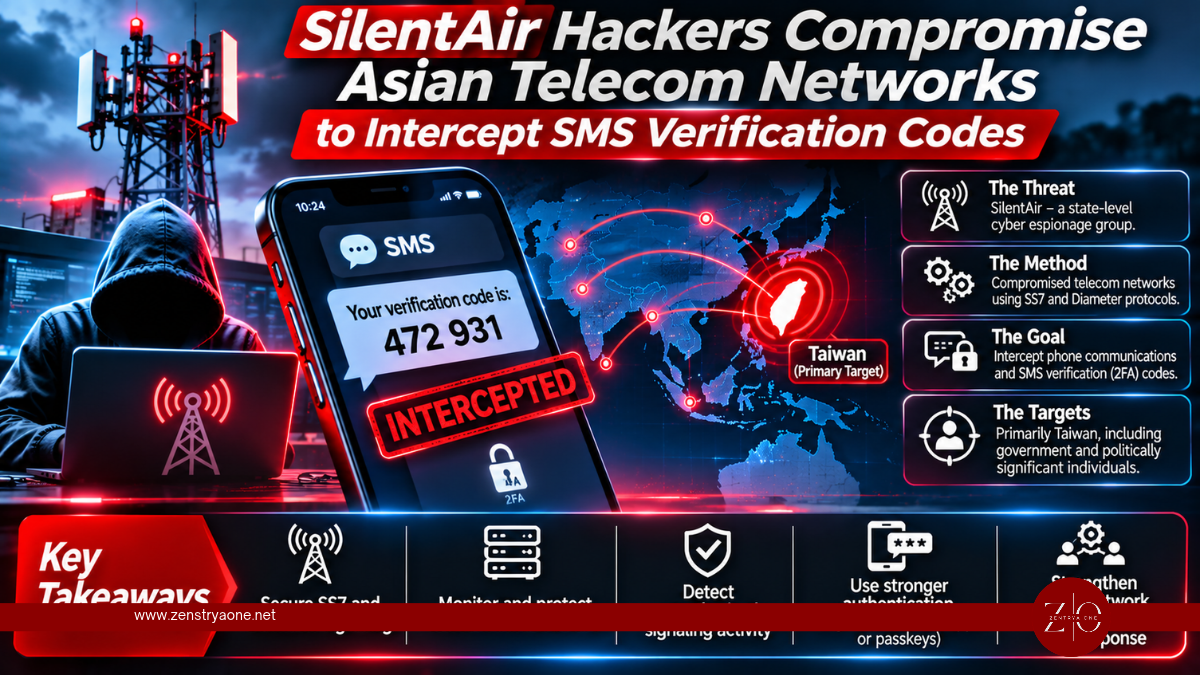
SilentAir Hackers Compromise Asian Telecom Networks to Intercept SMS Verification Codes
SilentAir hackers compromise Asian telecom networks to intercept SMS 2FA codes and spy on Taiwanese users, exposing mobile signaling security risks.
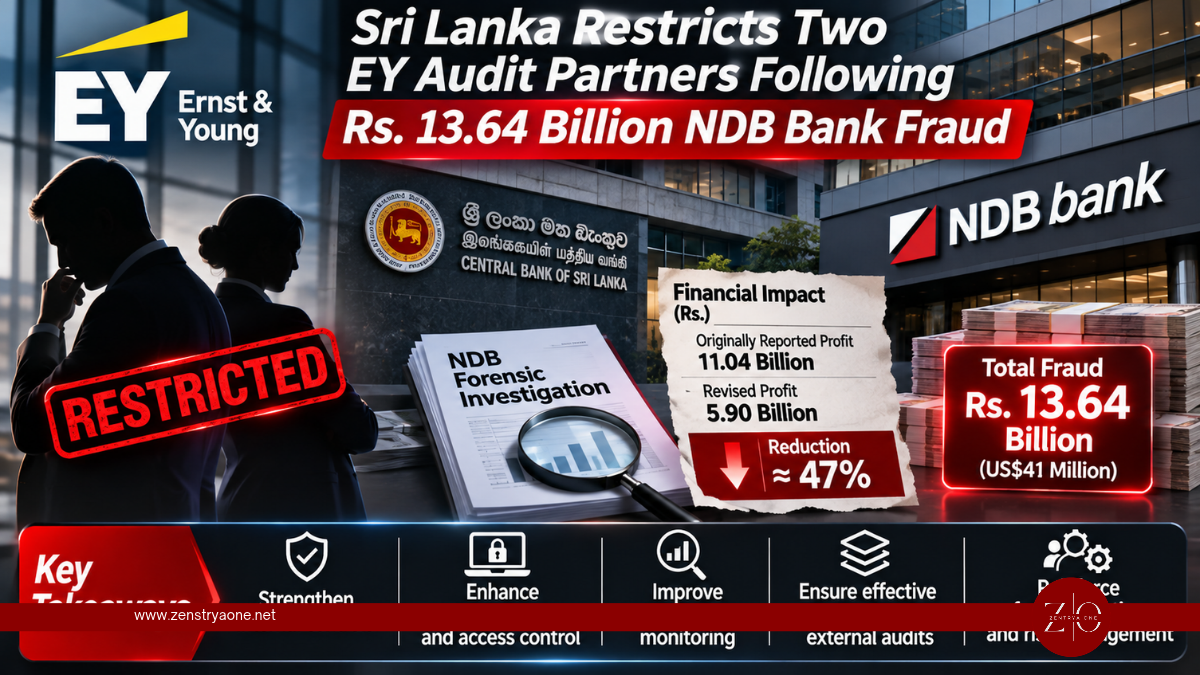
Sri Lanka Restricts Two EY Audit Partners Following Rs. 13.64 Billion NDB Bank Fraud
Sri Lanka's Central Bank restricts two EY audit partners following the Rs. 13.64 billion NDB fraud, raising concerns about banking controls and audit oversight.