Apple Fixes Critical iMessage Privacy Flaws That Could Expose Private Group Chats
Apple patches two iMessage vulnerabilities that could expose private group chats, alongside Bluetooth, AirPlay and Brotli security flaws.
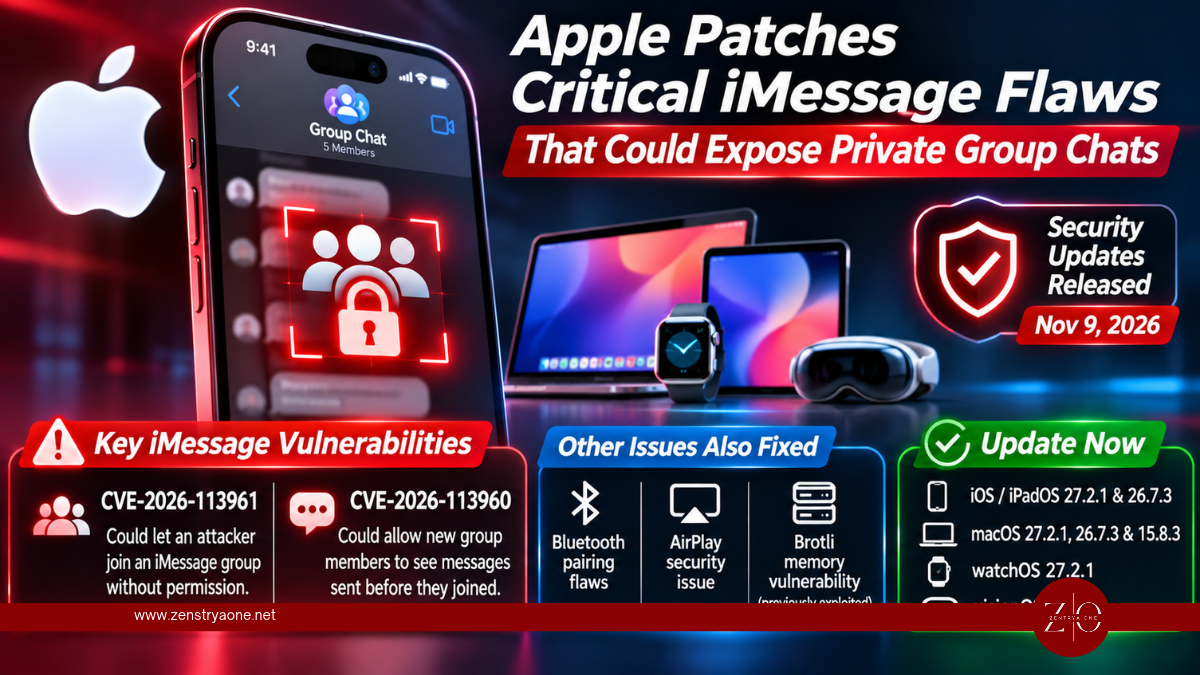
Apple has released emergency security updates addressing multiple vulnerabilities affecting iPhones, iPads, Macs and other Apple devices, including two iMessage flaws that could expose private group conversations to unauthorized users.
The updates, released on November 9, 2026, also address Bluetooth pairing weaknesses, AirPlay security issues and a vulnerability in the Brotli compression library.
Two iMessage Vulnerabilities Threaten Group Chat Privacy
Apple confirmed that two security flaws in its Messages application could compromise the confidentiality of group conversations.
The first vulnerability, CVE-2026-113961, involves improper authorization checks that could allow a remote attacker to join an iMessage group without permission and receive messages exchanged between participants.
Apple resolved the issue by strengthening authorization validation.
The second vulnerability, CVE-2026-113960, could allow newly added group members to access messages sent before they joined the conversation.
Apple addressed this weakness by removing the vulnerable code.
Both vulnerabilities were reported by an anonymous security researcher.
Importantly, Apple has not confirmed that either vulnerability was exploited in real-world attacks.
Bluetooth and AirPlay Security Issues Also Fixed
The security updates address several additional vulnerabilities affecting wireless connections.
Notable issues include:
- CVE-2026-113964: Could allow an attacker within Bluetooth range to bypass pairing-code attempt limits and pair without user interaction.
- CVE-2026-113965: Could allow a malicious Bluetooth device to establish a connection without user approval.
- CVE-2026-113970: A Bluetooth memory corruption vulnerability that could be triggered by a nearby attacker.
- CVE-2026-113969: Could allow an attacker on the same network to bypass AirPlay pairing-code attempt limits.
These weaknesses could undermine device pairing protections, particularly in environments where multiple wireless devices operate nearby.
Previously Exploited Brotli Vulnerability Patched
Apple also addressed CVE-2026-111497, a memory corruption vulnerability affecting Google's Brotli compression library.
The vulnerability had previously been added to the U.S. Cybersecurity and Infrastructure Security Agency's Known Exploited Vulnerabilities catalog.
However, Apple has not reported evidence that attackers exploited the issue specifically against Apple devices.
Which Apple Devices Need Updating?
Apple released security fixes across several operating systems, including:
- iOS and iPadOS 27.2.1
- iOS and iPadOS 26.7.3
- macOS Golden Gate 27.2.1
- macOS Tahoe 26.7.3
- macOS Sequoia 15.8.3
- watchOS 27.2.1
- visionOS 27.2.1
Additional updates are available for certain older Apple devices, although not every release includes fixes for the two iMessage vulnerabilities.
Users should check Apple's official security advisories to identify the appropriate update for their devices.
How to Protect Your Apple Devices
Apple users and organizations should take the following precautions:
- Install the latest updates: Open Settings → General → Software Update on iPhones and iPads.
- Update other Apple devices: Check macOS, watchOS and visionOS for available security releases.
- Review group conversations: Check sensitive iMessage groups for unfamiliar participants.
- Review Bluetooth connections: Remove unknown or unnecessary paired devices.
- Strengthen device security: Use strong passcodes and enable automatic security updates.
- Monitor security announcements: Follow Apple's official advisories for newly disclosed vulnerabilities.
Security Takeaway
Apple's latest security releases highlight the importance of protecting messaging privacy and wireless communication features.
Although there is no confirmed exploitation of the iMessage vulnerabilities, their potential impact makes timely patching important.
Apple users should install the latest supported security updates to protect private conversations, wireless connections and sensitive device information.
Related reporting

Hackers Steal Over 1 Million Payment Card Records by Exploiting Old Windows Vulnerability
Hackers exploit Windows CVE-2024-49138 to compromise over 700 POS terminals across 20 countries, stealing more than one million payment card records.
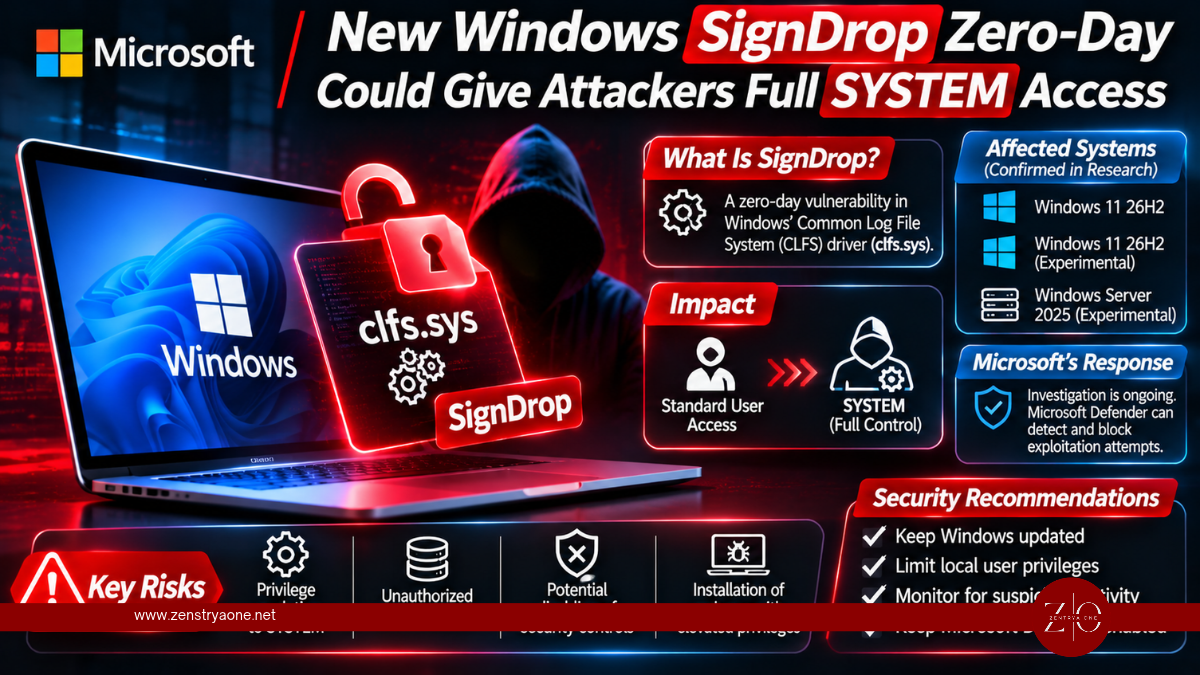
New Windows SignDrop Zero-Day Exploit Could Give Attackers Full SYSTEM Access
New Windows SignDrop zero-day exploit abuses Microsoft CLFS security protections to gain SYSTEM privileges. Learn about affected systems and mitigation.

Weekly Cybersecurity Recap: SSHole Attacks, Linux Root Exploits, AI-Powered Threats and Network Breaches
Weekly cybersecurity recap covering SSHole exploitation, Debian and Ubuntu APT vulnerabilities, Zyxel switch attacks, AI-driven threats and malware campaigns.