Weekly Cybersecurity Recap: SSHole Attacks, Linux Root Exploits, AI-Powered Threats and Network Breaches
Weekly cybersecurity recap covering SSHole exploitation, Debian and Ubuntu APT vulnerabilities, Zyxel switch attacks, AI-driven threats and malware campaigns.
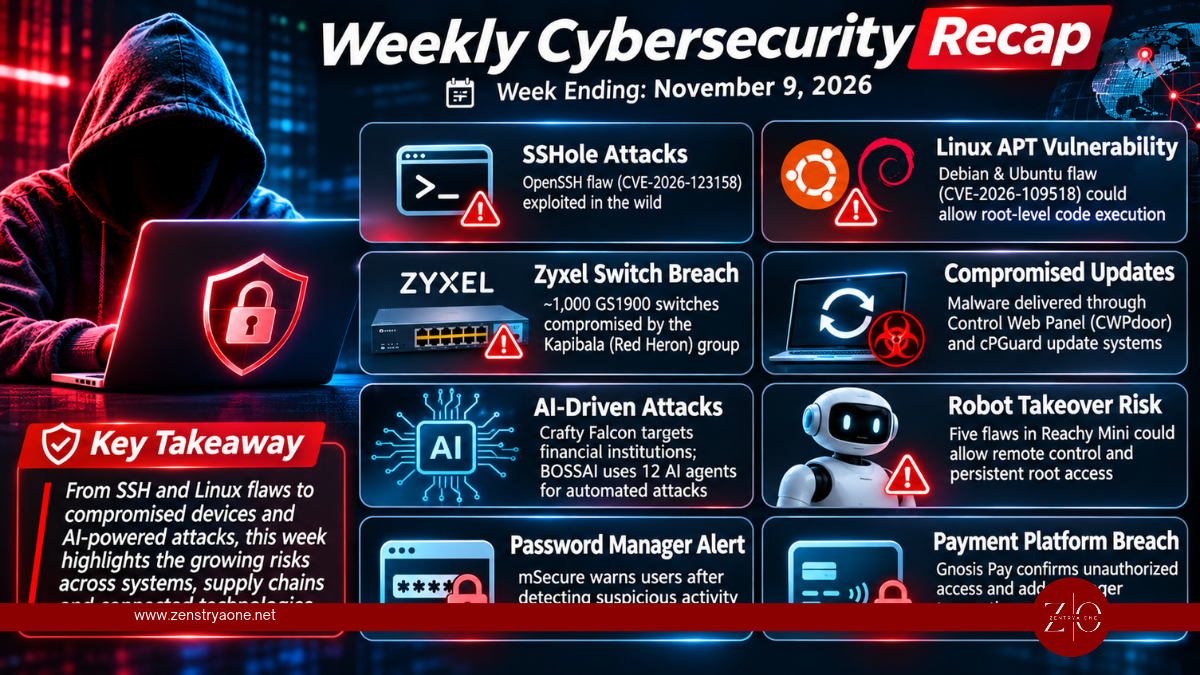
Cybersecurity researchers have reported a series of serious security incidents involving Linux servers, network devices, software update systems and AI-assisted cyberattacks.
This week's developments highlight a growing concern: attackers are exploiting both newly discovered vulnerabilities and long-standing security weaknesses to compromise organizations.
From OpenSSH authentication flaws to compromised network switches and malicious software updates, here are the key cybersecurity stories.
1. SSHole Vulnerability Targeted in Active Exploitation Attempts
Security researchers have detected attempts to exploit CVE-2026-123158, an OpenSSH vulnerability nicknamed SSHole.
The flaw, rated 8.1 on the CVSS severity scale, affects certain Linux configurations using the musl C library with Pluggable Authentication Modules (PAM) disabled.
Under vulnerable conditions, attackers may authenticate to accounts configured without passwords.
By November 9, researchers had recorded 20 exploitation attempts originating from 13 IP addresses across several countries.
Organizations should review SSH configurations, prevent empty-password accounts and apply relevant security updates.
2. Debian and Ubuntu APT Vulnerability Could Allow Root-Level Code Execution
A vulnerability tracked as CVE-2026-109518 has been identified in the APT package manager used by Debian and Ubuntu.
The flaw, rated 7.7, could allow an attacker positioned between a system and its software repository to interfere with package installation under specific conditions.
Affected configurations involve HTTP package sources and enabled retry settings.
Successful exploitation could result in the installation of an unverified package whose installation scripts execute with elevated privileges.
Administrators should install vendor patches and review package repository configurations.
3. Nearly 1,000 Zyxel Network Switches Compromised
Zyxel has addressed CVE-2026-107441, a critical security weakness affecting GS1900 series network switches.
Attackers reportedly exploited the vulnerability to compromise approximately 1,000 devices worldwide.
The campaign has been linked to a Chinese-speaking threat actor tracked as Kapibala, also known as Red Heron.
Researchers identified malware including the JITTERLY backdoor and SIXZUT rootkit.
The attackers reportedly collected configuration files and credentials, potentially enabling further network compromise.
4. Software Update Systems Used to Distribute Malware
Two incidents highlighted the dangers of compromised software distribution mechanisms.
Researchers identified a malicious version of the Control Web Panel server component used to distribute a Linux backdoor called CWPdoor.
The malware could respond to specially crafted web requests while suppressing related access logs.
Separately, attackers compromised the update distribution infrastructure of the cPGuard security suite on November 2.
The intrusion allowed malicious scripts to be delivered through a trusted software update channel.
These incidents demonstrate why organizations should monitor software integrity and investigate unexpected changes to critical applications.
5. AI-Assisted Cyberattacks Target Financial Institutions
India's Computer Emergency Response Team, CERT-In, warned about a threat actor known as Crafty Falcon targeting banking, financial services and insurance organizations.
The group reportedly used AI-assisted techniques and returned to previously targeted organizations where security weaknesses had not been fully addressed.
Researchers also identified a separate operation involving a network of 12 AI agents, known as BOSSAI, used to automate cyberattack activities against organizations in multiple countries.
These developments demonstrate how attackers are increasingly combining automation and artificial intelligence to expand the scale of their operations.
6. Security Researchers Demonstrate Robot Takeover Risks
JFrog researchers disclosed five vulnerabilities affecting the Reachy Mini companion robot.
When combined, the weaknesses could potentially allow attackers to execute malicious code, obtain persistent root-level access and control the robot's motors.
One attack scenario involved visiting a malicious webpage.
Although the findings concern a specific robotics platform, they highlight broader risks associated with connected devices and insecure software interfaces.
7. Password Manager and Payment Platform Security Incidents
Password manager provider mSecure warned users to review their security credentials following suspicious activity.
The company recommended precautions involving passwords, two-factor authentication and passkeys.
Meanwhile, Gnosis Pay disclosed unauthorized access to a system supporting its payment cards.
The company introduced additional transaction monitoring and mandatory 3D Secure verification for online payments.
Both incidents highlight the importance of protecting authentication systems and sensitive customer information.
What Organizations Should Prioritize
Security teams should focus on the following actions:
- Apply security patches to internet-facing services and network devices.
- Review SSH authentication settings and privileged accounts.
- Protect software update channels and verify application integrity.
- Monitor unusual administrative activity and unexpected configuration changes.
- Strengthen endpoint detection and network segmentation.
- Investigate recurring incidents to ensure remediation is complete.
- Assess security risks involving AI tools, connected devices and third-party services.
Security Takeaway
This week's cybersecurity developments show that sophisticated attacks do not always require complex techniques.
Weak authentication, vulnerable network devices, compromised update channels and incomplete remediation continue to provide attackers with opportunities.
Organizations should prioritize timely patching, strong access controls, continuous monitoring and secure software supply chains to reduce exposure to emerging threats.
Related reporting

Hackers Steal Over 1 Million Payment Card Records by Exploiting Old Windows Vulnerability
Hackers exploit Windows CVE-2024-49138 to compromise over 700 POS terminals across 20 countries, stealing more than one million payment card records.
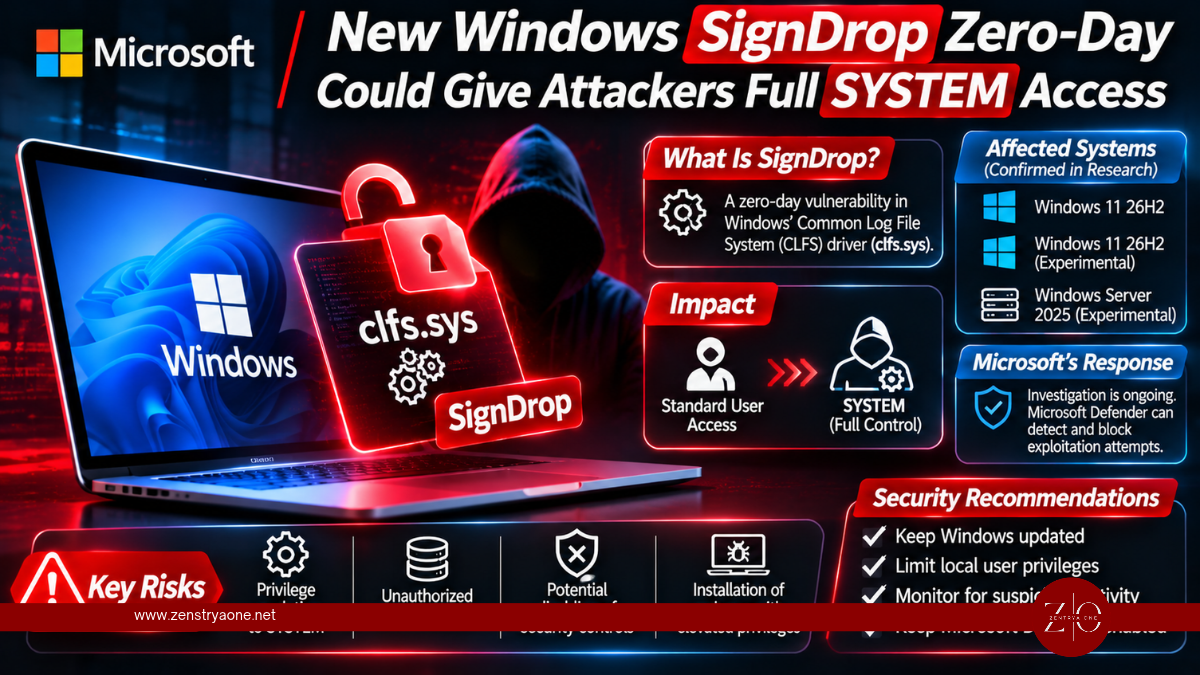
New Windows SignDrop Zero-Day Exploit Could Give Attackers Full SYSTEM Access
New Windows SignDrop zero-day exploit abuses Microsoft CLFS security protections to gain SYSTEM privileges. Learn about affected systems and mitigation.

Apple Fixes Critical iMessage Privacy Flaws That Could Expose Private Group Chats
Apple patches two iMessage vulnerabilities that could expose private group chats, alongside Bluetooth, AirPlay and Brotli security flaws.