Weekly Cybersecurity Recap: Critical Linux Flaws, DDoS Botnets, AI Attacks and $6.43 Billion Crypto Heist
Weekly cybersecurity recap covering the $6.43B Binance hack, critical Linux vulnerabilities, Kairos DDoS malware, Microsoft phishing, Android spyware and AI attacks.

The cybersecurity landscape witnessed another turbulent week as attackers exploited weaknesses in critical software, compromised trusted technology services and expanded their use of artificial intelligence to conduct cyberattacks.
Major developments included a record-breaking cryptocurrency theft attributed to North Korean hackers, a new Linux DDoS botnet, Microsoft authentication phishing campaigns, Android spyware and serious vulnerabilities affecting enterprise systems.
1. FBI Links $6.43 Billion Binance Hack to North Korean Group
The FBI attributed the theft of more than $6 billion in cryptocurrency from Binance to TraderTraitor, a North Korea-linked hacking group.
Industry reporting estimated the total stolen assets at approximately $6.43 billion, making it the largest publicly reported cryptocurrency theft.
The stolen assets were distributed across 11 blockchain networks, with approximately 82% involving Ethereum and Bitcoin.
Blockchain companies and stablecoin issuers reportedly froze around $2.85 billion in affected assets.
The incident highlights the growing sophistication of state-linked cryptocurrency theft operations.
2. Critical Linux Vulnerability Raises Remote Code Execution Concerns
A serious Linux kernel vulnerability, CVE-2026-98432, has raised concerns for organizations operating affected Linux distributions.
The vulnerability involves a use-after-free condition in the Linux TCP networking implementation.
The Linux kernel CVE team assigned the flaw a CVSS score of 9.8, although some distribution vendors assessed its severity differently.
Researchers demonstrated that exploitation could potentially enable remote attackers to execute commands with elevated privileges under specific system configurations.
Administrators should review their Linux vendor advisories, identify affected kernel versions and deploy security updates when available.
3. Kairos Malware Turns Linux Devices into DDoS Botnets
Researchers at Nozomi Networks identified a new Go-based Linux malware family called Kairos.
The malware transforms compromised Linux devices into nodes within a distributed denial-of-service (DDoS) botnet.
Observed attacks exploited Telnet services configured with default credentials, including root accounts without passwords.
Once installed, Kairos connects to an attacker-controlled command-and-control server and can launch attacks by opening large numbers of TCP connections against targeted systems.
The discovery reinforces the importance of disabling unnecessary remote services and eliminating insecure default credentials.
4. Microsoft Device-Code Phishing Campaign Targets Business Accounts
Cybersecurity researchers identified a phishing toolkit known as MadApe, designed to exploit Microsoft's device-code authentication process.
The campaign uses business-themed PDF documents and fraudulent file-sharing pages to persuade users to complete legitimate-looking authentication requests.
If victims approve an attacker-initiated device authorization, the attacker may obtain access tokens associated with the targeted account.
Unlike conventional password phishing, this technique can exploit legitimate authentication workflows.
Organizations should monitor unusual device-code authentication activity, strengthen conditional access policies and educate employees about unexpected sign-in requests.
5. Android Spyware Targets Messaging and Mobile Wallet Applications
Researchers uncovered an Android spyware offering called uCreator, designed to compromise messaging platforms and financial applications.
The spyware targets applications including WeChat, WhatsApp, Telegram, LINE, GCash and other popular services across Asia.
Attackers distribute modified versions of legitimate Android applications through social engineering and unofficial installation channels.
The malware uses application virtualization techniques to monitor activity and facilitate account abuse.
Users should avoid sideloading applications from untrusted sources and install software through verified distribution channels.
6. Volt Typhoon Uses Hidden Infrastructure for Cyber Espionage
China-linked threat group Volt Typhoon has reportedly developed a covert infrastructure framework known as Silent Train.
The framework uses compromised routers, IoT devices and enterprise systems to create constantly changing communication paths.
These compromised devices can help conceal the origin of malicious activity and support attacks against strategically important infrastructure.
Researchers linked the activity to efforts targeting communications, defense, logistics and other critical sectors.
Organizations should monitor unusual outbound connections, strengthen network-device security and investigate suspicious remote access patterns.
7. Polymarket Suffers Third-Party Supply Chain Attack
Prediction-market platform Polymarket temporarily suspended trading following a security incident involving third-party service provider DebugBear.
Attackers reportedly used malicious JavaScript to drain approximately $2.7 million from 33 cryptocurrency deposit wallets.
The incident demonstrates how a compromise involving a trusted external service can expose customers to significant financial losses.
Organizations should review third-party script dependencies, enforce appropriate browser security policies and continuously assess supplier security risks.
8. Malicious Claude Code Extension Exposes Developer Systems
Two compromised versions of a Claude Code extension distributed through Cursor Marketplace were reportedly modified to install a persistent SSH backdoor.
Cursor estimated that up to 5,000 users could have been affected.
The company responded by rotating keys, rebuilding marketplace infrastructure and working to disable the attacker's access channel.
The incident highlights the risks associated with developer tools and extensions, particularly when software is installed from trusted marketplaces without additional verification.
9. Security Researchers Disclose Patched ChatGPT Sharing Vulnerability
Researchers at Parameter Labs disclosed a vulnerability involving shared ChatGPT conversation links.
The now-patched issue could allow attacker-controlled JavaScript to execute within a victim's authenticated browser session when a malicious shared conversation was opened.
Potential consequences included unauthorized access to private conversation content and data exfiltration.
The vulnerability illustrates how trusted collaboration and content-sharing features can become security risks when user-controlled content is not sufficiently isolated.
10. AI-Assisted Ransomware and Malicious AI Models Raise New Concerns
Security researchers reported increasing misuse of AI tools in ransomware operations and software supply chain attacks.
Sophos identified the Aur0ra ransomware operation using AI-assisted development tools to support intrusion activities and privilege escalation.
Separately, researchers discovered malicious repositories on Hugging Face that abused the trust_remote_code feature to execute attacker-controlled Python code on systems loading affected models.
These incidents demonstrate how AI development environments and automation workflows can introduce additional security risks when untrusted code is executed.
Security Recommendations
Organizations should prioritize the following measures:
- Patch vulnerable systems: Review advisories affecting Linux, enterprise applications and internet-facing services.
- Secure remote access: Disable unnecessary Telnet services and remove default credentials.
- Strengthen identity protection: Monitor device-code authentication and enforce phishing-resistant MFA where supported.
- Protect software supply chains: Verify developer extensions, third-party scripts and AI model repositories.
- Monitor endpoints and networks: Detect unusual outbound traffic, suspicious processes and potential botnet activity.
- Improve mobile security: Restrict installation of untrusted applications and strengthen mobile device management.
- Enhance incident response: Maintain tested containment procedures and continuously review threat intelligence.
Security Takeaway
This week's incidents demonstrate that cybercriminals are increasingly exploiting trusted services, insecure configurations and emerging AI technologies to expand their operations.
From billion-dollar cryptocurrency thefts and compromised developer extensions to Linux botnets and sophisticated phishing campaigns, the risks extend across cloud platforms, enterprise networks and personal devices.
Continuous vulnerability management, identity protection, secure software supply chains and proactive threat monitoring remain essential to defending against modern cyber threats.
Related reporting

Hackers Steal Over 1 Million Payment Card Records by Exploiting Old Windows Vulnerability
Hackers exploit Windows CVE-2024-49138 to compromise over 700 POS terminals across 20 countries, stealing more than one million payment card records.
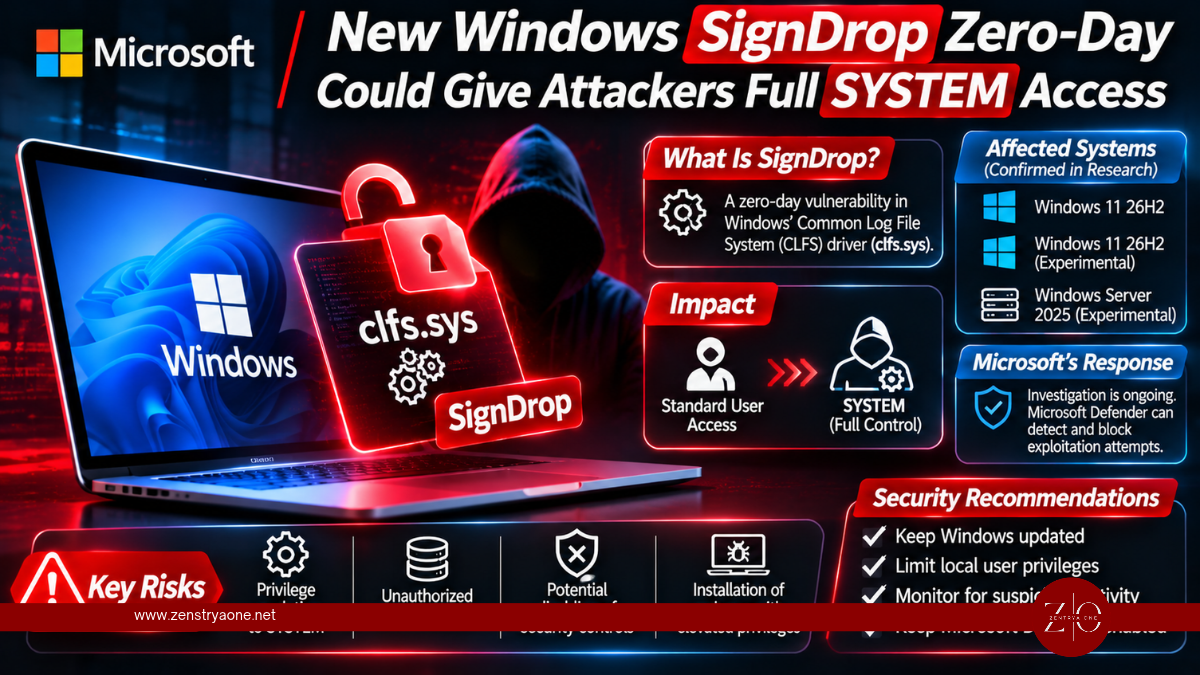
New Windows SignDrop Zero-Day Exploit Could Give Attackers Full SYSTEM Access
New Windows SignDrop zero-day exploit abuses Microsoft CLFS security protections to gain SYSTEM privileges. Learn about affected systems and mitigation.

Apple Fixes Critical iMessage Privacy Flaws That Could Expose Private Group Chats
Apple patches two iMessage vulnerabilities that could expose private group chats, alongside Bluetooth, AirPlay and Brotli security flaws.